 ChipApex | Global Electronic Components Supplier
SEARCH
Search Product
Search Post
— IC芯片 | 连接器 | 传感器 | 被动器件 —
Search productSearch post
— IC芯片 | 连接器 | 传感器 | 被动器件 —
Consult the customer manager about the wholesale price.
consultation hotline:86-132-6715-2157
email:[email protected]
Contact the product manager for consultation. One-stop consultation is available.
Do you want a lower wholesale price? Please send us your inquiry and we will reply immediately.
The RGW80NL65HRBTL is a single N-channel Field Stop Trench IGBT manufactured by ROHM Semiconductor, designed for automotive applications. It features a TO-263-3 (LPDL) surface-mount package with a maximum collector-emitter voltage of 650 V and a continuous collector current of 40 A at 100°C. The device exhibits a typical collector-emitter saturation voltage of 1.5 V and a turn-off time of 37 ns. It operates within a junction temperature range of -40°C to +175°C and has a power dissipation rating of 227 W. The component is AEC-Q101 qualified and RoHS compliant.
Verify the specific suffix BTL indicates tape-and-reel packaging when sourcing. Confirm AEC-Q101 certification status through official manufacturer documentation or authorized distributor datasheets. Ensure thermal management design accounts for the 227 W power dissipation rating in the LPDL package. Check for any recent product change notices affecting pinout or electrical characteristics.
Select this component for designs requiring high efficiency in automotive power conversion due to its low Vce(sat) and fast switching speed. Compare against other ROHM RGW series parts if different current ratings or package types like TO-247N are needed. Consider the 650V blocking voltage for standard 400V or 800V battery systems. Evaluate gate drive requirements based on the specified switching times.
This part belongs to the ROHM RGW series of high-speed fast-switching IGBTs. The series utilizes Field Stop Trench technology to balance low conduction losses with fast switching performance. The RGW80NL65HRBTL specifically targets automotive markets, offering robustness against voltage spikes through soft switching characteristics. It complements other variants in the family that may offer different current capacities or package configurations.
Direct substitutes include the RGW80NL65HRB in tube packaging. For through-hole applications, the RGW80TS65EHRC11 offers similar electrical specifications in a TO-247N package. Verify pin compatibility and thermal resistance differences before substituting.
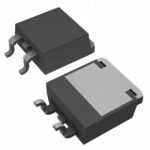 RGW80NL65HRBTL
The activity of extra discounts on wholesale prices is in full swing…
Please fill in your contact information and we will send you the latest wholesale price list.





