ChipApex | Global Electronic Components Supplier
SEARCH
Search Product
Search Post
— IC芯片 | 连接器 | 传感器 | 被动器件 —
Search productSearch post
— IC芯片 | 连接器 | 传感器 | 被动器件 —
Consult the customer manager about the wholesale price.
consultation hotline:86-132-6715-2157
email:[email protected]
Contact the product manager for consultation. One-stop consultation is available.
Do you want a lower wholesale price? Please send us your inquiry and we will reply immediately.
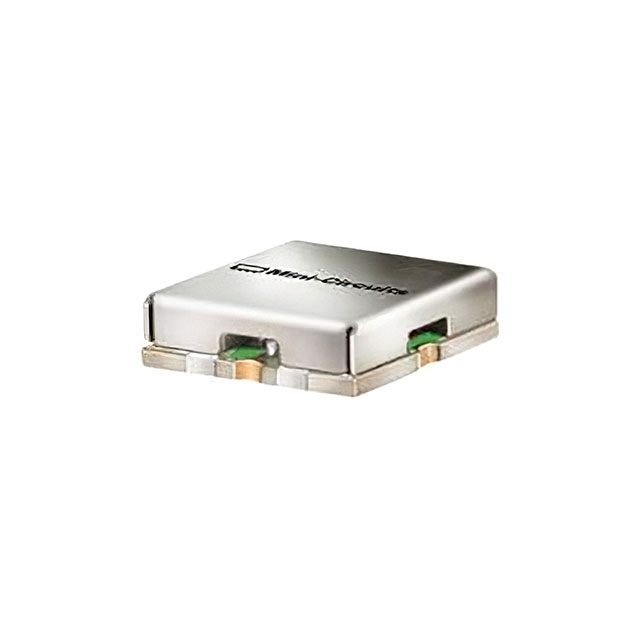
The RLP-120+ is a lumped element LC low-pass filter manufactured by Mini-Circuits, designed for signal conditioning applications. It operates within a frequency range of 0 Hz to 120 MHz and features a nominal impedance of 50 Ohms. The component utilizes an SMD/SMT termination style housed in an 8.89 mm x 8.89 mm x 2.54 mm package. Electrical specifications indicate a passband loss of less than 2 dB up to 120 MHz, with a 3 dB cutoff at 132 MHz. Stopband attenuation exceeds 20 dB from 170 MHz to 205 MHz and surpasses 40 dB between 205 MHz and 1000 MHz. Maximum ratings include an operating temperature range of -40°C to 85°C and a maximum RF power input of 0.5W.
Verify the specific datasheet revision and electrical test data directly with Mini-Circuits or authorized distributors before integration. Confirm that the 0.5W maximum RF power input rating aligns with your system's peak power requirements to prevent component damage. Ensure thermal management strategies accommodate the specified operating temperature range of -40°C to 85°C during final product validation.
Select this component when a sharp roll-off characteristic is required below 200 MHz with minimal insertion loss in the passband. The 50 Ohm impedance matches standard RF systems. Consider the physical dimensions of 8.89 mm x 8.89 mm for PCB layout constraints. Evaluate the 0.5W power handling limit against potential signal peaks to ensure reliable operation under all expected load conditions.
This part belongs to Mini-Circuits' RLP series of lumped element filters, which are engineered for cost-effective solutions in RF and microwave applications. The series covers various frequency ranges using discrete LC components rather than distributed transmission line structures. This approach allows for smaller physical footprints compared to equivalent waveguide or stripline filters at lower frequencies.
Consult Mini-Circuits official documentation for verified substitute part numbers within the same family or alternative technologies. Cross-reference impedance, frequency cutoff, and power handling specifications to ensure functional equivalence. Do not assume compatibility based solely on package similarity without verifying electrical performance parameters.
 RLP-120+
The activity of extra discounts on wholesale prices is in full swing…
Please fill in your contact information and we will send you the latest wholesale price list.