ChipApex | Global Electronic Components Supplier
SEARCH
Search Product
Search Post
— IC芯片 | 连接器 | 传感器 | 被动器件 —
Search productSearch post
— IC芯片 | 连接器 | 传感器 | 被动器件 —
Consult the customer manager about the wholesale price.
consultation hotline:86-132-6715-2157
email:[email protected]
Contact the product manager for consultation. One-stop consultation is available.
Do you want a lower wholesale price? Please send us your inquiry and we will reply immediately.
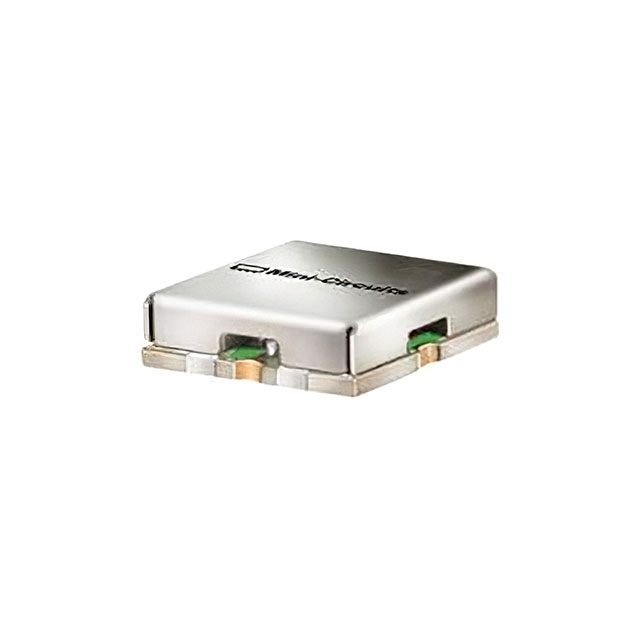
The RLP-340+ is a lumped LC low-pass filter manufactured by Mini-Circuits, designed for radio frequency applications. It operates with a cutoff frequency of 365 MHz and supports a bandwidth from DC to 340 MHz. The component features a 50 Ohm impedance and utilizes an 8-SMD, no-lead surface mount package with dimensions of 8.89 mm x 8.89 mm x 2.54 mm. It complies with RoHS and REACH standards and withstands a maximum RF power input of 0.5W. The operating temperature range spans from -40°C to 85°C, while storage temperatures are supported between -55°C and 100°C.
Verify the specific datasheet version when sourcing, as Mini-Circuits may update specifications over time. Confirm that the 8-SMD package matches your PCB footprint requirements. Ensure the 0.5W power rating aligns with your system's peak signal levels. Check for RoHS compliance documentation if required by your manufacturing standards. Validate the cutoff frequency specification against your application's spectral needs before finalizing procurement.
Select this component when a sharp roll-off below 365 MHz is required in a compact form factor. The 50 Ohm impedance makes it suitable for standard RF transmission lines. Consider the SMT package for high-volume production environments. Evaluate the thermal performance within the specified operating range. Compare insertion loss characteristics if signal integrity is critical in your design.
Mini-Circuits specializes in RF, IF, and microwave components ranging from DC to 86 GHz. The RLP-340+ belongs to their series of lumped element filters, which offer cost-effective solutions for frequency selection. These components are widely used in wireless infrastructure and test equipment due to their reliability and consistent performance across temperature variations.
Consult Mini-Circuits official substitution guides for compatible alternatives. Verify electrical parameters such as cutoff frequency and impedance match exactly. Ensure physical dimensions fit existing board layouts. Check for equivalent power handling capabilities. Confirm package type compatibility to avoid rework.
 RLP-340+
The activity of extra discounts on wholesale prices is in full swing…
Please fill in your contact information and we will send you the latest wholesale price list.