 ChipApex | Global Electronic Components Supplier
SEARCH
Search Product
Search Post
— IC芯片 | 连接器 | 传感器 | 被动器件 —
Search productSearch post
— IC芯片 | 连接器 | 传感器 | 被动器件 —
Consult the customer manager about the wholesale price.
consultation hotline:86-132-6715-2157
email:[email protected]
Contact the product manager for consultation. One-stop consultation is available.
Do you want a lower wholesale price? Please send us your inquiry and we will reply immediately.
The RN1903,LF(CT is a dual NPN bias resistor built-in transistor (digital transistor) manufactured by Toshiba Semiconductor and Storage. It integrates two NPN transistors with internal bias resistors in a US6 surface-mount package. The device features a collector-emitter voltage of 50V, a continuous collector current of 100mA, and a total power dissipation of 200mW. Each transistor includes an input resistor R1 and an emitter resistor R2, both specified at 22kΩ. The component supports a junction temperature up to 150°C and offers a transition frequency of 250MHz.
Verify the specific ordering suffix against official documentation to confirm packaging format and compliance status. Ensure that the selected variant matches the required lead times and availability constraints for the intended production schedule. Cross-reference the manufacturer's latest datasheet to validate any updates to electrical characteristics or reliability data before finalizing procurement specifications.
Select this component when a dual NPN configuration with integrated biasing is required for switching or driver applications. The 22kΩ resistor values are suitable for standard logic interface levels. Consider the US6 package dimensions for PCB layout constraints. Verify that the 50V rating and 100mA current capacity meet the specific load requirements of the target application circuit.
This part belongs to the RN190x series of bias resistor built-in transistors from Toshiba. The series includes complementary PNP variants in the RN290x family. These devices are designed to replace discrete transistor and resistor networks, offering a consolidated solution for digital switching tasks in consumer electronics and industrial control systems.
Check for direct equivalents within the RN190x series or compatible dual NPN digital transistors from other manufacturers. Ensure pinout compatibility and identical electrical parameters such as VCEO, IC, and resistor values. Verify package similarity to avoid PCB redesign requirements during substitution.
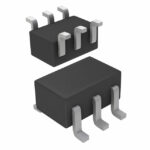 RN1903,LF(CT
The activity of extra discounts on wholesale prices is in full swing…
Please fill in your contact information and we will send you the latest wholesale price list.




