 ChipApex | Global Electronic Components Supplier
SEARCH
Search Product
Search Post
— IC芯片 | 连接器 | 传感器 | 被动器件 —
Search productSearch post
— IC芯片 | 连接器 | 传感器 | 被动器件 —
Consult the customer manager about the wholesale price.
consultation hotline:86-132-6715-2157
email:[email protected]
Contact the product manager for consultation. One-stop consultation is available.
Do you want a lower wholesale price? Please send us your inquiry and we will reply immediately.
The RN1910,LXHF(CT is a dual NPN digital transistor from Toshiba Semiconductor and Storage, designed for automotive applications under AEC-Q101 qualification. It integrates two NPN transistors with built-in bias resistors in a US-6 (SOT-363) surface-mount package. Key electrical parameters include a collector-emitter voltage (VCEO) of 50 V, a continuous collector current (IC) of 100 mA, and a typical input resistance (R1) of 4.7 kOhms. The device features a maximum operating frequency of 250 MHz, a DC current gain (hFE) minimum of 120, and a power dissipation (Pd) of 200 mW. It operates at temperatures up to +150°C and includes an emitter-base voltage (VEBO) rating of 5 V.
Verify the exact ordering suffix and packaging format against the manufacturer's latest datasheet before procurement. Confirm AEC-Q101 certification status if automotive compliance is mandatory. Check for alternative suffixes that may indicate different tape-and-reel specifications or moisture sensitivity levels. Ensure compatibility with existing PCB footprints designated as US-6 or SOT-363. Validate supply chain authenticity through authorized distributors to prevent counterfeit components.
Select this component when a dual NPN digital transistor with a 4.7 kOhm base resistor is required for automotive environments. Consider the 50 V VCEO and 100 mA IC limits to ensure adequate headroom for the target application. Evaluate the 200 mW power dissipation capability relative to thermal constraints in the final assembly. Compare the 250 MHz frequency response against switching speed requirements. Verify that the US-6 package dimensions fit within the available board space constraints.
This part belongs to Toshiba's RN series of pre-biased transistors, which integrate internal resistors to simplify biasing networks. The LXHF(CT) suffix indicates specific packaging and handling characteristics defined by the manufacturer. As an automotive-qualified device, it aligns with industry standards for reliability in harsh operating conditions. The dual NPN structure allows for complementary logic functions or push-pull configurations within a single footprint.
Publicly confirmed substitute part numbers are not available in the provided documentation. Verify pinout compatibility and electrical parameter equivalence before considering any cross-reference. Ensure that any alternative device meets AEC-Q101 requirements if automotive usage is intended. Check for identical package dimensions to avoid PCB redesign efforts.
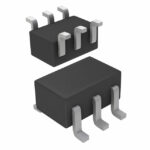 RN1910,LXHF(CT
The activity of extra discounts on wholesale prices is in full swing…
Please fill in your contact information and we will send you the latest wholesale price list.




