ChipApex | Global Electronic Components Supplier
SEARCH
Search Product
Search Post
— IC芯片 | 连接器 | 传感器 | 被动器件 —
Search productSearch post
— IC芯片 | 连接器 | 传感器 | 被动器件 —
Consult the customer manager about the wholesale price.
consultation hotline:86-132-6715-2157
email:[email protected]
Contact the product manager for consultation. One-stop consultation is available.
Do you want a lower wholesale price? Please send us your inquiry and we will reply immediately.
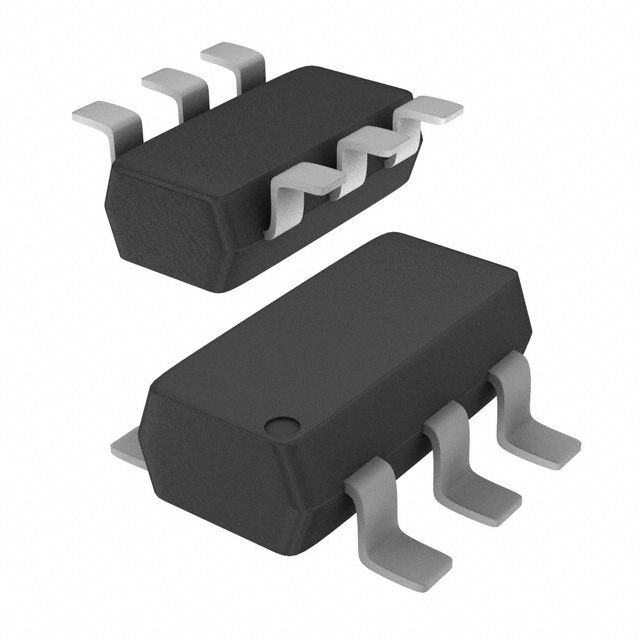
The RN2606(TE85L,F) is a dual PNP digital transistor from Toshiba Semiconductor and Storage, housed in an SM6 package with six leads. It integrates two NPN-equivalent PNP transistors with built-in bias resistors (R1: 4.7 kΩ, R2: 47 kΩ). Key electrical ratings include a collector-emitter voltage of -50 V, a continuous collector current of -100 mA, and a power dissipation of 300 mW at 25°C. The device features a minimum DC current gain (hFE) of 80 at -10 mA, a transition frequency (fT) of 200 MHz, and operates within a junction temperature range up to 150°C.
Verify the specific part number suffix against official Toshiba documentation to confirm packaging and tape specifications. Ensure that the SM6 package dimensions and pinout align with the target PCB footprint. Confirm RoHS compliance status through the manufacturer's latest release notes before finalizing procurement orders.
Select this component when a dual PNP configuration with integrated biasing is required for space-constrained designs. The 4.7 kΩ input resistor suits standard logic interface levels. Verify that the -50 V rating meets the system voltage requirements and that the 300 mW thermal dissipation capability is sufficient for the intended operating environment.
This device belongs to the RN2601–RN2606 family of silicon PNP epitaxial planar transistors utilizing Toshiba’s PCT process. The family shares identical electrical characteristics and package types, differing only in the resistance values of the built-in bias resistors. The RN2606 specifically pairs a 4.7 kΩ resistor with a 47 kΩ resistor.
Direct substitutes are not explicitly listed in the provided datasheet. Designers should evaluate other dual PNP digital transistors with similar bias ratios and SM6 packaging, ensuring voltage and current ratings match or exceed the original specifications.
The RN2606 includes two built-in bias resistors: R1 is 4.7 kΩ and R2 is 47 kΩ.
The maximum collector-emitter voltage (VCEO) is rated at -50 V.
Yes, the device has a transition frequency (fT) of 200 MHz, making it suitable for high-speed switching and interface applications.
 RN2606(TE85L,F)
The activity of extra discounts on wholesale prices is in full swing…
Please fill in your contact information and we will send you the latest wholesale price list.