ChipApex | Global Electronic Components Supplier
SEARCH
Search Product
Search Post
— IC芯片 | 连接器 | 传感器 | 被动器件 —
Search productSearch post
— IC芯片 | 连接器 | 传感器 | 被动器件 —
Consult the customer manager about the wholesale price.
consultation hotline:86-132-6715-2157
email:[email protected]
Contact the product manager for consultation. One-stop consultation is available.
Do you want a lower wholesale price? Please send us your inquiry and we will reply immediately.
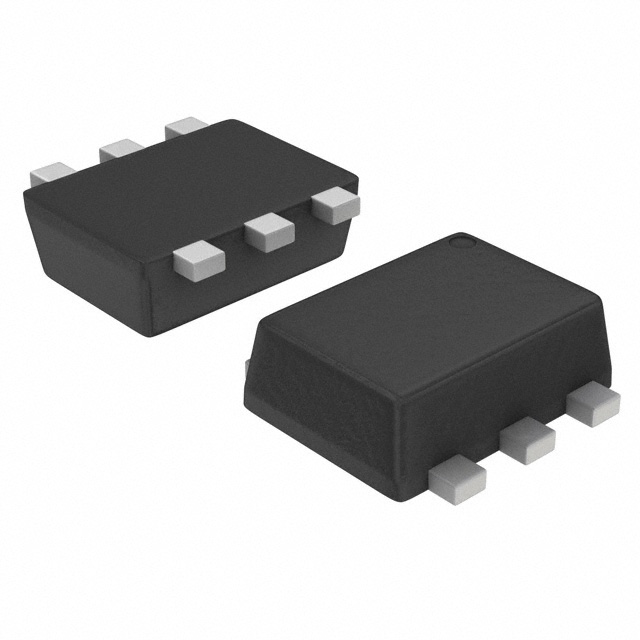
The RN4984FE,LXHF(CT is a dual digital transistor from Toshiba Semiconductor and Storage, featuring one NPN and one PNP pre-biased transistor in a point-symmetrical 2-in-1 configuration. It operates with a collector-emitter voltage (VCEO) of 50 V and a continuous collector current (IC) of 100 mA. The device includes internal base resistors: R1 is typically 4.7 kOhms and R2 is typically 100 kOhms. It is housed in an SOT-363 (US-6) surface-mount package with a power dissipation rating of 200 mW. The component is qualified under AEC-Q101 standards for automotive applications and supports a maximum operating temperature of +150°C.
Verify the specific suffix LXHF against the manufacturer's latest documentation to confirm lead-free compliance and tape-and-reel specifications. Ensure that the ordering quantity aligns with the standard reel size to avoid partial reel handling issues. Cross-reference the part number with authorized distributors to confirm current availability and authenticity before finalizing procurement plans.
Select this component when a symmetrical NPN/PNP pair is required for push-pull or differential signaling applications. The 4.7 kOhm input resistor suits moderate drive currents, while the 100 kOhm output resistor provides high impedance isolation. Consider the 50 V breakdown voltage and 100 mA current limit to ensure operation remains within safe absolute maximum ratings during peak load conditions.
This part belongs to the RN49xx series of digital transistors, which are widely used for their small footprint and integrated biasing. The FE variant typically denotes specific resistance values and packaging options compared to other series members like RN4982 or RN4985. The LXHF suffix indicates automotive-grade qualification and halogen-free manufacturing processes.
Direct substitutes include RN4984,LF(CT for non-automotive grades or RN4984,LXHF(CT if the specific FE resistance configuration differs. Verify pin compatibility and electrical parameters such as hFE and saturation voltage before substitution to ensure circuit functionality remains unchanged.
 RN4984FE,LXHF(CT
The activity of extra discounts on wholesale prices is in full swing…
Please fill in your contact information and we will send you the latest wholesale price list.