 ChipApex | Global Electronic Components Supplier
SEARCH
Search Product
Search Post
— IC芯片 | 连接器 | 传感器 | 被动器件 —
Search productSearch post
— IC芯片 | 连接器 | 传感器 | 被动器件 —
Consult the customer manager about the wholesale price.
consultation hotline:86-132-6715-2157
email:[email protected]
Contact the product manager for consultation. One-stop consultation is available.
Do you want a lower wholesale price? Please send us your inquiry and we will reply immediately.
The RO3144D is a surface-mount SAW resonator manufactured by RFMi, designed for high-frequency signal processing applications. It operates at a center frequency of 916.5 MHz with a frequency stability of 32 ppb. The component utilizes a compact ceramic package, specifically the SM3838-8 form factor measuring 3.8 mm x 3.8 mm, ensuring hermetic sealing and quartz frequency stabilization. It is qualified under AEC-Q200 standards, supporting automotive-grade reliability requirements. The device features a load capacitance of 2.1 pF and is intended for board mount installation in wireless communication systems.
Verify that the specific suffix variant (e.g., -1 or -2) matches the required load capacitance and tolerance specifications for the target circuit design. Confirm AEC-Q200 compliance if automotive deployment is intended. Ensure the supplier provides official datasheets to validate the 32 ppb stability and 916.5 MHz center frequency against system requirements before finalizing orders.
Select this component when a stable, low-profile resonator is needed for 916.5 MHz applications. Consider the 2.1 pF load capacitance for impedance matching. The AEC-Q200 qualification makes it suitable for automotive use cases where long-term reliability and temperature stability are critical. Compare physical dimensions against available PCB real estate to ensure compatibility with the SM3838-8 footprint.
The RO3144D belongs to RFMi's SAW resonator portfolio, which leverages Surface Acoustic Wave technology for timing and filtering solutions. As an Akoustis brand product, it integrates advanced ceramic packaging techniques. This series supports emerging wireless standards and IoT connectivity needs, offering a balance between performance, size, and cost-effectiveness for mass-produced electronic devices.
Direct substitutes include the RO3144D-1 and RO3144D-2 variants from the same manufacturer family. These alternatives share the 916.5 MHz operating frequency but may differ in load capacitance or tolerance specifications. Verify electrical parameters and pinout compatibility before swapping components to ensure circuit functionality remains intact.
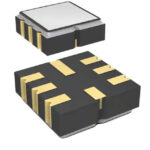 RO3144D
The activity of extra discounts on wholesale prices is in full swing…
Please fill in your contact information and we will send you the latest wholesale price list.




