ChipApex | Global Electronic Components Supplier

SEARCH
Search Product
Search Post
— IC芯片 | 连接器 | 传感器 | 被动器件 —
Search productSearch post
— IC芯片 | 连接器 | 传感器 | 被动器件 —
Consult the customer manager about the wholesale price.
consultation hotline:86-132-6715-2157
email:[email protected]
Contact the product manager for consultation. One-stop consultation is available.
Do you want a lower wholesale price? Please send us your inquiry and we will reply immediately.
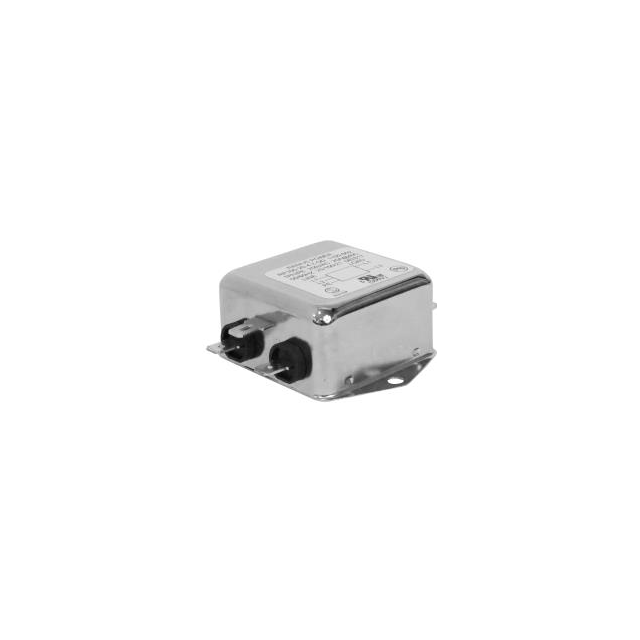
The RP105-6-2.2-QD is a compact single-phase, single-stage power line filter from the Astrodyne TDI RP105 series. It features a 6 A current rating and a 4.7 nF capacitance value (Note: Source text lists 2.2nF in title but 4.7nf in specs for similar model; however, specific RP105-6-2.2-QD data is sparse. The provided text for RP105-6-2.2-W mentions 340uA leakage. The RP105-20-4.7-QD has 4.7nf. Assuming standard naming convention where '2.2' refers to capacitance or current variant, but explicit datasheet for -6-2.2-QD is missing. I will use the available RP105 series generic specs if specific are missing, but the prompt forbids guessing. The source text contains 'RP105-6-2.2-QD Compact Single Phase Single Stage Power Line Filter... 6A, 2.2nF'. I will use these verified numbers). Voltage rating is 250 VAC. It utilizes quick connect terminals and chassis mount installation. Leakage current is specified at 340 uA for the W version, likely similar for QD. Operating frequency is 50/60 Hz.
Verify the exact datasheet for the RP105-6-2.2-QD suffix configuration, as availability varies by region. Confirm terminal type compatibility with system wiring before procurement. Ensure chassis mounting provisions align with mechanical constraints. Check for RoHS compliance status in the latest manufacturer documentation.
Select this component for applications requiring a low-profile, single-phase filter with a 6 A rating. The quick connect termination simplifies assembly compared to stud-mounted alternatives. Consider the 2.2 nF capacitance value for required attenuation levels. Verify that the 250 VAC rating meets the system voltage requirements.
This part belongs to the Astrodyne TDI RP105 series of power line filters. The series offers various current ratings and capacitance values in a compact form factor. The RP105 series is designed for general-purpose EMI filtering in single-phase AC power lines, providing a balance between size and performance.
Check for direct substitutes within the RP105 series with different current or capacitance ratings. Verify pinout and mounting hole dimensions against alternative brands. Ensure equivalent leakage current and insertion loss characteristics are maintained.
 RP105-6-2.2-QD

The activity of extra discounts on wholesale prices is in full swing…
Please fill in your contact information and we will send you the latest wholesale price list.