ChipApex | Global Electronic Components Supplier
SEARCH
Search Product
Search Post
— IC芯片 | 连接器 | 传感器 | 被动器件 —
Search productSearch post
— IC芯片 | 连接器 | 传感器 | 被动器件 —
Consult the customer manager about the wholesale price.
consultation hotline:86-132-6715-2157
email:[email protected]
Contact the product manager for consultation. One-stop consultation is available.
Do you want a lower wholesale price? Please send us your inquiry and we will reply immediately.
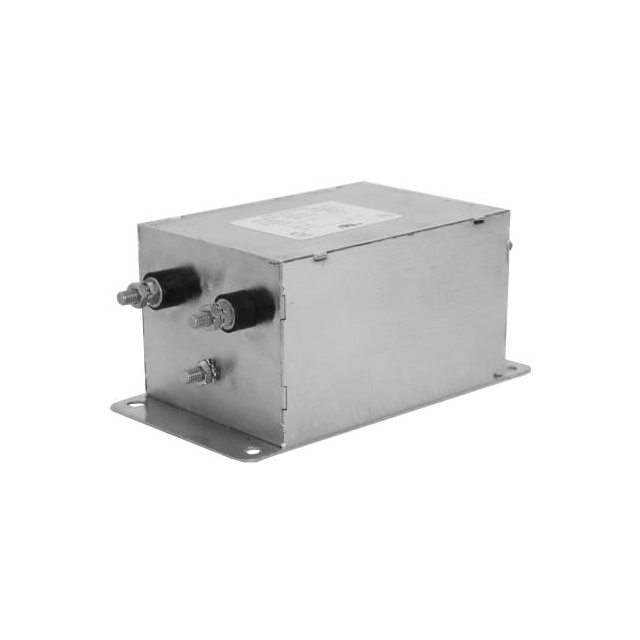
The Astrodyne TDI RP125-30-2.2-S is a high-performance single-stage power line filter designed for AC mains applications. It features a 250 VAC voltage rating and supports a continuous current of 30 A at operating frequencies of 50 Hz or 60 Hz. The unit utilizes chassis mount installation with stud termination. Key electrical specifications include a leakage current of 90 µA and a capacitance value of 2.2 nF. Physical dimensions are 94 mm in length and 46 mm in height. The component complies with EN60939 standards and holds cURus certification.
Verify the specific suffix designation against official manufacturer documentation to ensure correct capacitance and termination configuration. Confirm that the required current rating aligns with system demands, as variations exist within the series. Check regional availability status directly with authorized distributors, as supply constraints may apply. Ensure mounting hardware compatibility with the specified stud type before finalizing procurement orders.
Select this model when a compact single-stage solution is required for 30 A circuits. The low leakage current specification makes it suitable for sensitive medical or precision instrumentation environments. Verify that the physical footprint fits the available chassis space. Consider the thermal environment, as the maximum operating temperature is limited to +40°C. Ensure the input voltage does not exceed the 250 VAC rating for safe operation.
This component belongs to the RP125 series of power line filters from Astrodyne TDI. The series offers various current ratings and capacitance options to suit different EMI suppression needs. The RP125 models are characterized by their high reliability and compliance with global regulatory requirements for electromagnetic compatibility in power distribution systems.
Direct substitutes include other RP125 series variants such as RP125-30-1-S or RP125-30-2.2-C, provided the capacitance and termination style match the original design requirements. Cross-referencing datasheets is essential to verify identical electrical performance and mechanical fit.
 RP125-30-2.2-S
The activity of extra discounts on wholesale prices is in full swing…
Please fill in your contact information and we will send you the latest wholesale price list.