ChipApex | Global Electronic Components Supplier
SEARCH
Search Product
Search Post
— IC芯片 | 连接器 | 传感器 | 被动器件 —
Search productSearch post
— IC芯片 | 连接器 | 传感器 | 被动器件 —
Consult the customer manager about the wholesale price.
consultation hotline:86-132-6715-2157
email:[email protected]
Contact the product manager for consultation. One-stop consultation is available.
Do you want a lower wholesale price? Please send us your inquiry and we will reply immediately.
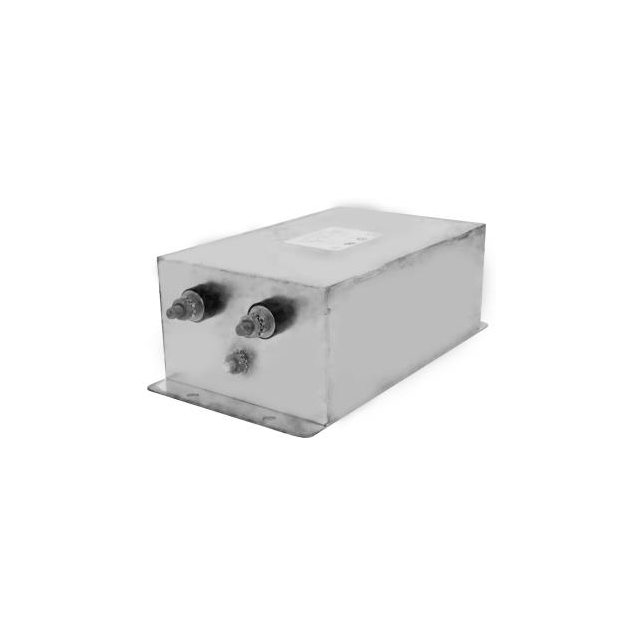
The RP135-100-1-C is a high-performance single-stage power line filter manufactured by Astrodyne TDI. It belongs to the RP135 series and is designed for robust electromagnetic interference suppression in demanding electrical environments. The unit features a chassis mount configuration with stud termination, ensuring secure installation on equipment frames. It operates at standard industrial frequencies of 50 Hz and 60 Hz. The component is constructed to meet stringent international safety and compliance standards, including EN60939 and CURUS certifications, making it suitable for critical power conditioning applications where reliable noise filtration is required.
Verify the specific suffix 'C' against official Astrodyne TDI documentation to confirm exact terminal configuration and mounting specifications. Ensure compatibility with existing chassis mounting points and stud sizes before integration. Cross-reference the part number with current manufacturer datasheets to validate compliance certificates and environmental ratings for your specific operational context.
Select this model when a single-stage solution is sufficient for the required attenuation levels. Confirm that the chassis mount style aligns with the available space and mechanical constraints of the enclosure. Verify that the operating frequency range matches the system's power supply characteristics. Ensure that the stud termination type is compatible with the available grounding or mounting hardware.
This component is part of the RP135 series from Astrodyne TDI, which specializes in power line filters. The series is engineered for high-performance applications requiring effective noise reduction. The RP135 models are characterized by their robust construction and ability to handle significant electrical loads while maintaining signal integrity through efficient electromagnetic interference filtering.
Consult official Astrodyne TDI substitution guides for verified equivalent part numbers. Do not assume interchangeability with other series without confirming electrical and mechanical parameters. Verify that any substitute maintains the same single-stage performance and certification requirements.
 RP135-100-1-C
The activity of extra discounts on wholesale prices is in full swing…
Please fill in your contact information and we will send you the latest wholesale price list.