ChipApex | Global Electronic Components Supplier
SEARCH
Search Product
Search Post
— IC芯片 | 连接器 | 传感器 | 被动器件 —
Search productSearch post
— IC芯片 | 连接器 | 传感器 | 被动器件 —
Consult the customer manager about the wholesale price.
consultation hotline:86-132-6715-2157
email:[email protected]
Contact the product manager for consultation. One-stop consultation is available.
Do you want a lower wholesale price? Please send us your inquiry and we will reply immediately.
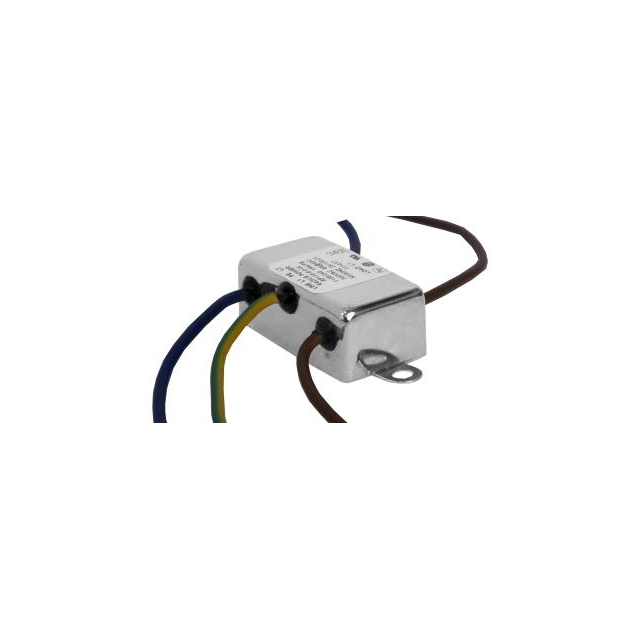
The Astrodyne TDI RP135-100-4.7-W is a high-performance, single-stage power line filter designed for AC mains applications. It operates at a rated voltage of 250 VAC and supports a continuous current of 100 A at 50/60 Hz frequencies. The unit features a capacitance value of 4.7 nF and utilizes wire lead termination for circuit integration. Constructed for chassis mounting, this component provides effective electromagnetic interference suppression while maintaining low leakage current characteristics suitable for sensitive electronic equipment.
Verify the specific suffix 'W' corresponds to the wire lead configuration required for your assembly. Confirm that the 100 A rating aligns with your system's peak and continuous load demands. Ensure chassis mounting provisions are available in the enclosure design. Check compliance certifications such as UL or CSA against regional regulatory requirements before finalizing procurement.
Select this model when high current handling is critical alongside compact single-stage filtering needs. Compare leakage current specifications against safety standards for patient-connected or sensitive devices. Evaluate physical dimensions to ensure compatibility with existing chassis layouts. Consider thermal management requirements given the high current throughput capabilities of the internal components.
This component belongs to the RP135 series from Astrodyne TDI, which specializes in high-performance power line filters. The series offers various configurations tailored for different current ratings and termination styles. The RP135 designation indicates a specific performance tier within their broader portfolio of electromagnetic interference suppression solutions for AC power lines.
Direct substitutes may include other models within the RP135 series with adjusted current ratings or termination types. Verify electrical parameters such as capacitance and voltage ratings match exactly. Cross-reference mechanical mounting dimensions and terminal spacing to ensure physical compatibility without redesigning the host enclosure.
 RP135-100-4.7-W
The activity of extra discounts on wholesale prices is in full swing…
Please fill in your contact information and we will send you the latest wholesale price list.