ChipApex | Global Electronic Components Supplier
SEARCH
Search Product
Search Post
— IC芯片 | 连接器 | 传感器 | 被动器件 —
Search productSearch post
— IC芯片 | 连接器 | 传感器 | 被动器件 —
Consult the customer manager about the wholesale price.
consultation hotline:86-132-6715-2157
email:[email protected]
Contact the product manager for consultation. One-stop consultation is available.
Do you want a lower wholesale price? Please send us your inquiry and we will reply immediately.
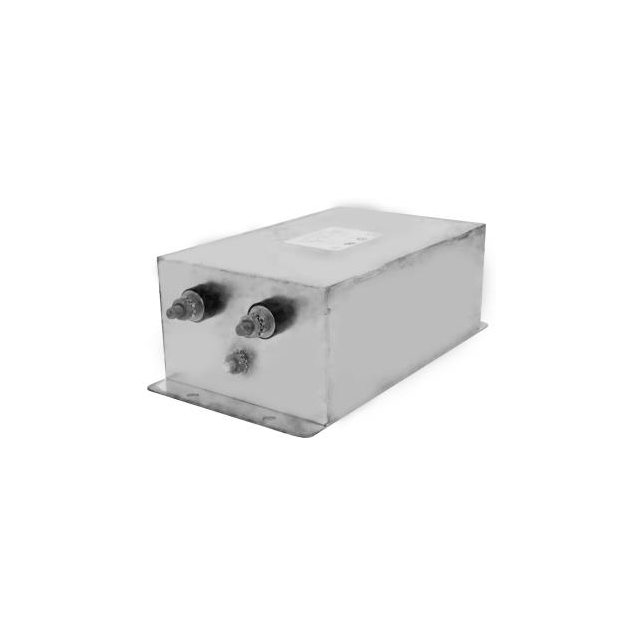
The Astrodyne TDI RP135-60-4.7-S is a high-performance, single-stage power line filter designed for AC applications. It supports a rated voltage of 250 VAC and handles a continuous current of 60 A at operating frequencies of 50 Hz or 60 Hz. The unit incorporates a capacitance value of 4.7 nF and exhibits a leakage current of 1.8 mA. Physically, it measures 57 mm in height and utilizes a chassis mount installation style with stud-type termination. The component complies with UL, CSA, and EN standards.
Verify the specific datasheet revision to confirm exact dimensional tolerances and terminal specifications before finalizing the design. Ensure that the mounting hardware matches the stud configuration provided by the manufacturer. Confirm that the system ground connection can accommodate the specified leakage current without violating safety limits. Cross-reference the compliance certificates with local regulatory requirements for the target deployment region.
Select this component when a robust, single-stage solution is required for high-current AC lines up to 60 A. The 4.7 nF capacitance offers a balance between attenuation performance and leakage current management. Consider the chassis mount form factor if panel space allows for direct screw-down installation. Evaluate the physical dimensions against the available enclosure space to ensure proper fitment alongside other components.
This model belongs to the RP135 series from Astrodyne TDI, which focuses on high-performance power line filtration. The series typically addresses electromagnetic interference (EMI) challenges in demanding environments. The RP135 designation indicates a specific current and voltage rating tier within the broader product portfolio, distinguishing it from lower-capacity variants like the RP135-6 or higher-capacity models.
Direct substitutes include the RP135-60-10-S, which shares the same electrical ratings but features 10 nF capacitance. Verify that the increased capacitance does not exceed permissible leakage current limits in the specific application.
 RP135-60-4.7-S
The activity of extra discounts on wholesale prices is in full swing…
Please fill in your contact information and we will send you the latest wholesale price list.