ChipApex | Global Electronic Components Supplier
SEARCH
Search Product
Search Post
— IC芯片 | 连接器 | 传感器 | 被动器件 —
Search productSearch post
— IC芯片 | 连接器 | 传感器 | 被动器件 —
Consult the customer manager about the wholesale price.
consultation hotline:86-132-6715-2157
email:[email protected]
Contact the product manager for consultation. One-stop consultation is available.
Do you want a lower wholesale price? Please send us your inquiry and we will reply immediately.
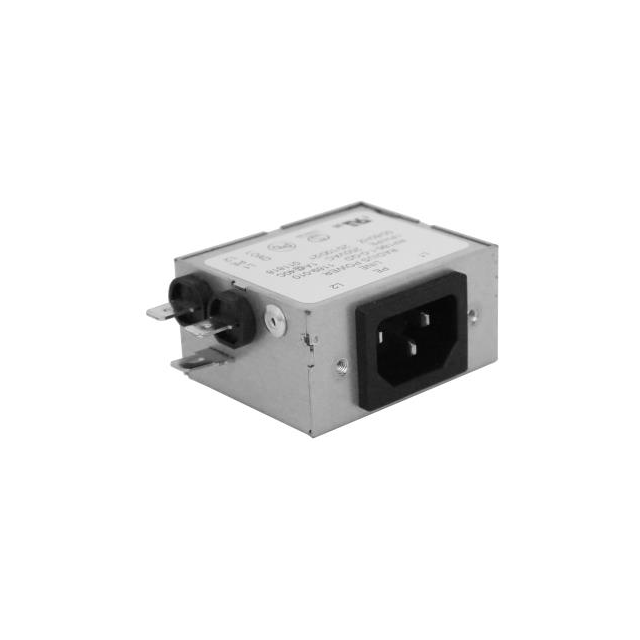
The RP186-1-4.7-QD is a single-stage EMI/EMC power line filter module manufactured by Astrodyne TDI, designed for IEC inlet applications. It features a rated current of 1 A and operates at voltages up to 250 V AC at 50/60 Hz. The component utilizes a capacitance value of 4.7 nF to provide noise suppression. Physical dimensions include a length of 57.2 mm, with leakage current specifications documented at 800 uA and 400 uA under specific test conditions.
Verify the exact datasheet version before procurement, as specifications such as leakage current may vary based on testing standards. Confirm that the 57.2 mm dimension aligns with your chassis or PCB layout constraints. Ensure the 1 A rating meets the maximum load requirements of your target application without derating issues. Cross-reference the 4.7 nF capacitance value against your circuit's impedance matching needs.
Select this component when a single-stage solution is sufficient for your EMI reduction goals. The 1 A current rating suits low-power consumer and industrial electronics. Consider the physical footprint of 57.2 mm during mechanical design. Verify compatibility with IEC inlet connectors commonly used in global markets. Evaluate if the 4.7 nF capacitance provides adequate attenuation for your specific noise spectrum.
This module belongs to the RP186 series from Astrodyne TDI, which specializes in power line filters. The series is characterized by ultra-high performance characteristics suitable for demanding environments. Similar models in the lineup, such as the RP186-1-2.2-QD, offer different capacitance values like 2.2 nF, allowing designers to tune filtering performance based on specific circuit requirements and space limitations.
The RP186-1-2.2-QD serves as a functional substitute within the same series, offering identical current and voltage ratings but with a reduced capacitance of 2.2 nF instead of 4.7 nF. Designers must verify that the lower capacitance still meets their specific EMI suppression targets. No other direct substitutes are confirmed in public documentation.
 RP186-1-4.7-QD
The activity of extra discounts on wholesale prices is in full swing…
Please fill in your contact information and we will send you the latest wholesale price list.