ChipApex | Global Electronic Components Supplier
SEARCH
Search Product
Search Post
— IC芯片 | 连接器 | 传感器 | 被动器件 —
Search productSearch post
— IC芯片 | 连接器 | 传感器 | 被动器件 —
Consult the customer manager about the wholesale price.
consultation hotline:86-132-6715-2157
email:[email protected]
Contact the product manager for consultation. One-stop consultation is available.
Do you want a lower wholesale price? Please send us your inquiry and we will reply immediately.
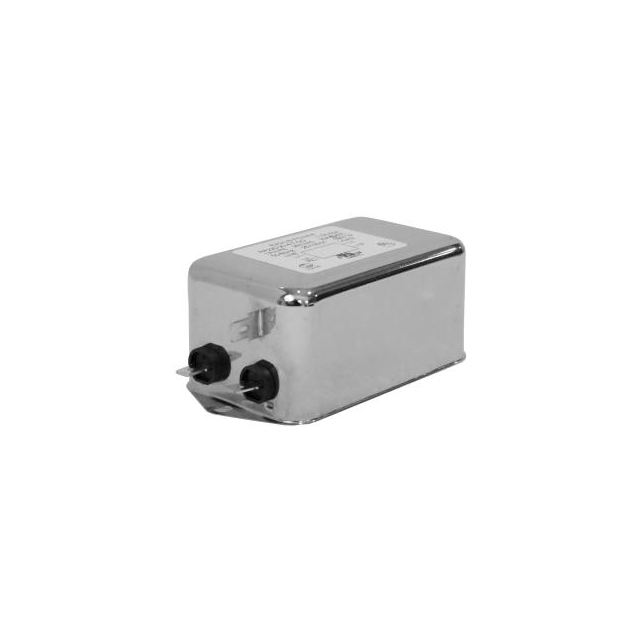
The RP220-12-2.2-S is a high-performance dual-stage power line filter from the Astrodyne TDI RP220 series, designed for single-phase applications. It features a rated current of 12A and a capacitance value of 2.2nF. The unit supports a voltage rating of 250VAC and operates at standard frequencies of 50Hz and 60Hz. Designed for chassis mounting with stud termination, it ensures secure installation in industrial environments. The filter complies with UL, CSA, and EN safety standards, providing reliable electromagnetic interference suppression for sensitive electronic equipment.
Verify the specific suffix 'S' indicates stud termination when confirming compatibility with existing panel cutouts and hardware. Ensure the 12A current rating aligns with the maximum load requirements of the target circuit. Confirm that the 2.2nF capacitance meets leakage current constraints for the specific application environment. Cross-reference the datasheet for precise dimensional tolerances to ensure proper fit within the enclosure.
Select this model when superior attenuation performance is required compared to single-stage alternatives. The dual-stage design offers higher insertion loss across critical frequency bands. Verify that the chassis mounting method suits the available space and structural integrity of the installation site. Consider the thermal dissipation characteristics if the filter will operate near its maximum current rating continuously.
This component belongs to the RP220 series, which focuses on high-performance power line filtration. The series distinguishes itself through dual-stage construction, offering better noise rejection than standard single-stage filters. It targets applications where electromagnetic compatibility is critical. The product line emphasizes reliability and compliance with international safety regulations for global deployment.
Direct substitutes may include other RP220 series variants with different current or capacitance ratings, such as RP220-20-2.2-QD, provided the termination style and electrical parameters match the system requirements. Verify that any replacement maintains the dual-stage topology to preserve expected attenuation levels.
 RP220-12-2.2-S
The activity of extra discounts on wholesale prices is in full swing…
Please fill in your contact information and we will send you the latest wholesale price list.