ChipApex | Global Electronic Components Supplier
SEARCH
Search Product
Search Post
— IC芯片 | 连接器 | 传感器 | 被动器件 —
Search productSearch post
— IC芯片 | 连接器 | 传感器 | 被动器件 —
Consult the customer manager about the wholesale price.
consultation hotline:86-132-6715-2157
email:[email protected]
Contact the product manager for consultation. One-stop consultation is available.
Do you want a lower wholesale price? Please send us your inquiry and we will reply immediately.
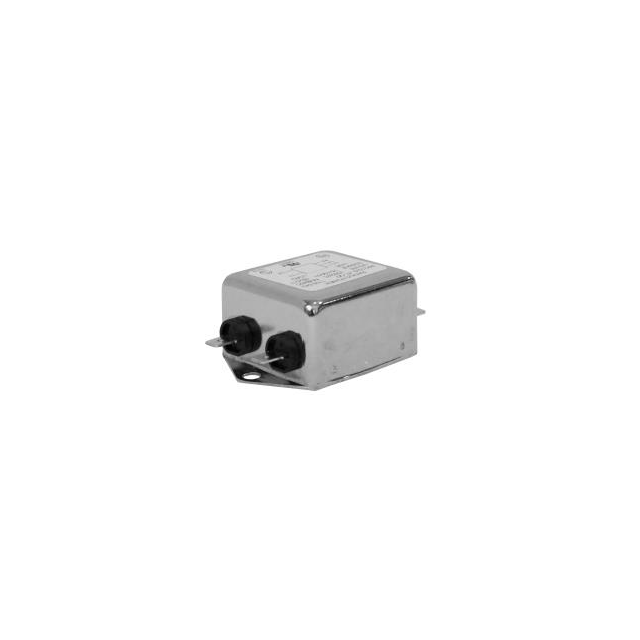
The Astrodyne TDI RP225-20-.47-S is a single-phase, two-stage power line filter designed for high-performance electromagnetic interference suppression. It features a rated voltage of 250 VAC and a continuous current capacity of 20 A. The unit incorporates a Y-capacitance value of 0.47 nF to manage leakage currents effectively while maintaining safety compliance. Constructed for chassis mounting with stud terminations, this component operates at standard frequencies of 50 Hz and 60 Hz. It adheres to UL, CSA, and EN certification standards, ensuring reliable integration into industrial power conditioning systems requiring robust EMI filtering capabilities.
Verify the specific termination style and capacitance value against the official datasheet before procurement. Confirm that the chassis mounting requirements align with the installation environment. Ensure the operating voltage and current ratings exceed the system's maximum demands to guarantee long-term reliability and safety compliance in the final application.
Select this model when dual-stage performance is required for stringent EMI reduction in single-phase applications. The 20 A rating suits moderate-power industrial loads. Verify that the 0.47 nF capacitance meets leakage current constraints for the specific end-use equipment. Ensure the chassis mount form factor fits the available enclosure space and thermal management strategy.
This component belongs to the RP225 series, which focuses on high-performance dual-stage filtering solutions. The series offers various current and capacitance configurations to address diverse EMI suppression needs. The RP225 models are engineered for durability and consistent performance in demanding electrical environments, supporting global compliance requirements for electronic equipment.
Direct substitutes within the same series include RP225-20-1-QD and RP225-20-3.3-QD. These alternatives share identical mechanical footprints and electrical ratings but differ in capacitance values. Verify that the alternative capacitance does not violate leakage current limits or alter the desired filtering characteristics for the specific circuit.
 RP225-20-.47-S
The activity of extra discounts on wholesale prices is in full swing…
Please fill in your contact information and we will send you the latest wholesale price list.