ChipApex | Global Electronic Components Supplier
SEARCH
Search Product
Search Post
— IC芯片 | 连接器 | 传感器 | 被动器件 —
Search productSearch post
— IC芯片 | 连接器 | 传感器 | 被动器件 —
Consult the customer manager about the wholesale price.
consultation hotline:86-132-6715-2157
email:[email protected]
Contact the product manager for consultation. One-stop consultation is available.
Do you want a lower wholesale price? Please send us your inquiry and we will reply immediately.
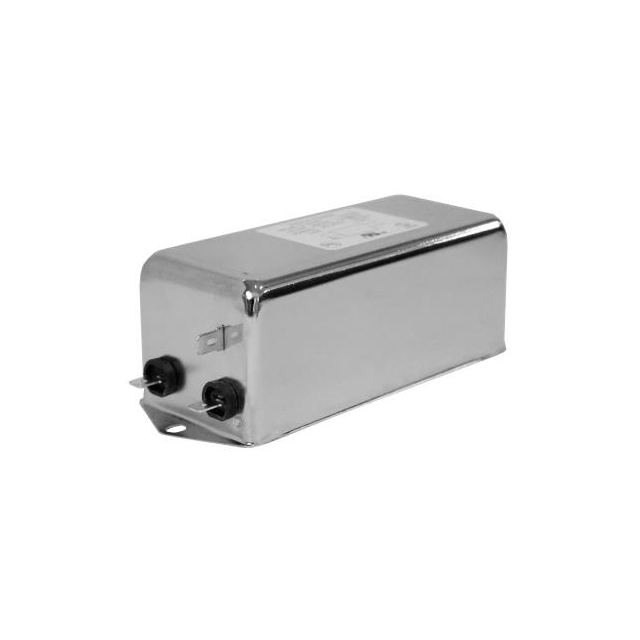
The Astrodyne TDI RP240-150-2.2-C is a single-phase EMC/EMI power line filter module designed for high-current industrial applications. It features a two-stage filtering architecture to ensure effective noise suppression in demanding environments. The unit is rated for a continuous current of 150 A and operates at voltages up to 250 VAC within standard 50 Hz or 60 Hz frequency ranges. This model utilizes terminal block connections for secure electrical interfacing. Its construction supports robust performance in power conditioning systems where significant electromagnetic interference mitigation is required alongside high power handling capabilities.
Verify the specific part number suffix against official manufacturer documentation to confirm terminal type and capacitance values. Ensure that the operating voltage and current ratings align with your system requirements before procurement. Cross-reference the datasheet for precise mechanical dimensions and mounting specifications to guarantee physical compatibility with your enclosure design.
Select this component when a single-phase solution is required for currents up to 150 A. The two-stage design offers superior attenuation compared to single-stage alternatives. Confirm that the terminal block interface matches your wiring infrastructure. Evaluate the thermal management requirements based on the expected load conditions and ambient temperature constraints.
This component belongs to the Astrodyne TDI RP series of power line filters, which are engineered for industrial-grade electromagnetic interference suppression. The RP series encompasses various configurations tailored for different current ratings and phase requirements. This specific model addresses the need for high-capacity filtering in single-phase AC power networks.
Consult official substitution guides for equivalent models within the same series. Verify that any replacement maintains the 150 A rating and two-stage topology. Ensure mechanical fit and terminal compatibility are preserved during any cross-referencing process.
 RP240-150-2.2-C
The activity of extra discounts on wholesale prices is in full swing…
Please fill in your contact information and we will send you the latest wholesale price list.