ChipApex | Global Electronic Components Supplier
SEARCH
Search Product
Search Post
— IC芯片 | 连接器 | 传感器 | 被动器件 —
Search productSearch post
— IC芯片 | 连接器 | 传感器 | 被动器件 —
Consult the customer manager about the wholesale price.
consultation hotline:86-132-6715-2157
email:[email protected]
Contact the product manager for consultation. One-stop consultation is available.
Do you want a lower wholesale price? Please send us your inquiry and we will reply immediately.
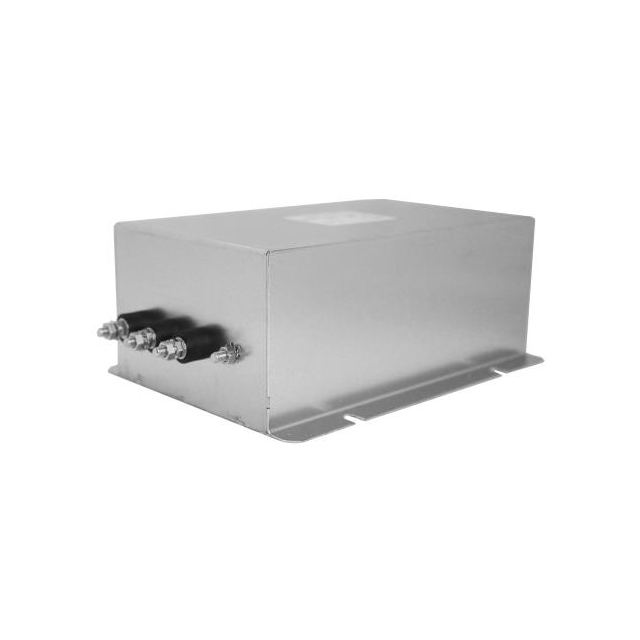
The Astrodyne TDI RP300-55-0-W is a three-phase delta single-stage power line filter designed for industrial electromagnetic interference suppression. It features a voltage rating of 480 VAC and a current capacity of 55 A, operating at standard frequencies of 50 Hz and 60 Hz. The unit utilizes wire lead termination for connection and incorporates a capacitance value of 0 nF, resulting in a leakage current of 1 mA. Certified under CURUS standards, this chassis-mount component ensures compliance with EN60939 regulations for electrical safety and EMC performance.
Verify the specific termination style and mounting hardware requirements against your equipment specifications before ordering. Confirm that the 480 VAC rating aligns with your operational voltage levels. Ensure compatibility with existing wiring infrastructure given the wire lead configuration. Check local regulatory compliance needs regarding CURUS and EN60939 certifications prior to final procurement decisions.
Select this model when a single-stage solution suffices for moderate noise attenuation in three-phase delta circuits. Consider the 55 A current rating to ensure adequate headroom for peak loads. Evaluate the 0 nF capacitance impact on system grounding if sensitive analog circuits are present. Compare physical dimensions and weight constraints against available panel space for chassis installation.
This component belongs to the RP300 series, which provides robust power line filtering solutions for demanding industrial environments. The series emphasizes durability and consistent performance across various three-phase applications. Units are engineered to meet rigorous international standards for electromagnetic compatibility and electrical safety in heavy-duty power systems.
Direct substitutes include the RP300-55-0-S and RP300-55-10-C within the same series. Verify that alternative part numbers maintain identical voltage, current, and phase configuration ratings. Ensure mechanical mounting interfaces and terminal types match existing assembly requirements to avoid modification.
 RP300-55-0-W
The activity of extra discounts on wholesale prices is in full swing…
Please fill in your contact information and we will send you the latest wholesale price list.