ChipApex | Global Electronic Components Supplier
SEARCH
Search Product
Search Post
— IC芯片 | 连接器 | 传感器 | 被动器件 —
Search productSearch post
— IC芯片 | 连接器 | 传感器 | 被动器件 —
Consult the customer manager about the wholesale price.
consultation hotline:86-132-6715-2157
email:[email protected]
Contact the product manager for consultation. One-stop consultation is available.
Do you want a lower wholesale price? Please send us your inquiry and we will reply immediately.
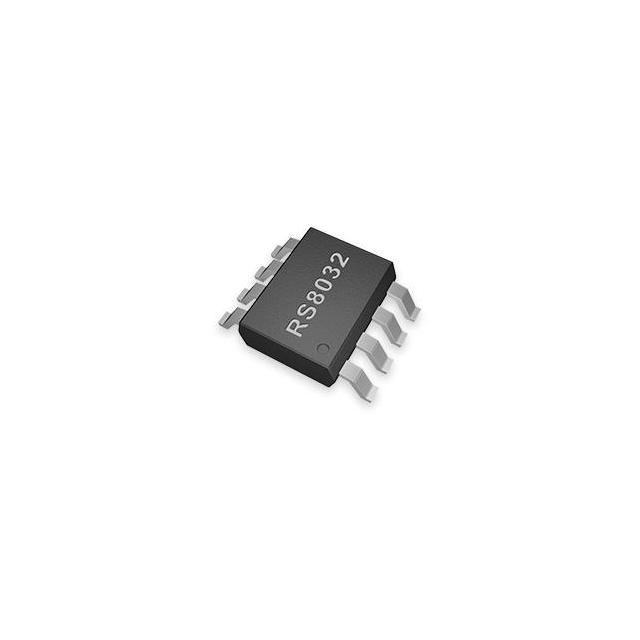
The RS8032XK is a dual-channel CMOS operational amplifier manufactured by Runic Technology. It features a low supply voltage range of 1.4V to 5.5V and a maximum supply span of 5.5V. The device offers rail-to-rail input and output capabilities with a typical input offset voltage of 3mV. Key electrical specifications include a gain-bandwidth product of 15kHz, a quiescent current of 670nA, and a slew rate of 0.0075V/µs. It is housed in an 8-SOIC package and operates within a temperature range of -40°C to 125°C.
Verify the specific suffix (e.g., DG) against the manufacturer's official datasheet to ensure correct packaging and tape-and-reel specifications. Confirm that the supplier provides traceability documentation for automotive or industrial applications. Check for RoHS compliance status if required by your manufacturing standards. Ensure the component lot date code meets your inventory requirements to prevent shelf-life issues.
Select this component when low power consumption is critical alongside rail-to-rail signal integrity. The 15kHz bandwidth suits low-frequency applications such as sensor conditioning rather than high-speed data acquisition. Consider the 8-SOIC package constraints for PCB layout. Compare the 670nA quiescent current against other dual op-amps in the same family to optimize system battery life.
This part belongs to Runic Technology's linear amplifier portfolio, specifically designed for instrumentation and buffer applications. It complements other parts like the RS8412XK and RS724XP in the company's catalog. The series targets markets including electric vehicle control units, DC-DC converters, and general-purpose analog signal conditioning where low voltage operation is essential.
Check for direct pin-compatible alternatives within the Runic Technology lineup, such as single-channel variants if only one amplifier is needed. Verify that any substitute maintains the 1.4V minimum supply voltage and rail-to-rail characteristics. Ensure the replacement supports the -40°C to 125°C temperature range for automotive compatibility.
 RS8032XK
The activity of extra discounts on wholesale prices is in full swing…
Please fill in your contact information and we will send you the latest wholesale price list.