ChipApex | Global Electronic Components Supplier
SEARCH
Search Product
Search Post
— IC芯片 | 连接器 | 传感器 | 被动器件 —
Search productSearch post
— IC芯片 | 连接器 | 传感器 | 被动器件 —
Consult the customer manager about the wholesale price.
consultation hotline:86-132-6715-2157
email:[email protected]
Contact the product manager for consultation. One-stop consultation is available.
Do you want a lower wholesale price? Please send us your inquiry and we will reply immediately.
The RS8557XF is a zero-drift, rail-to-rail input/output CMOS operational amplifier manufactured by Jiangsu Runic Technology Co., Ltd. It features a single channel with a gain-bandwidth product of 4.3 MHz and a slew rate of 2.5 V/μs. The device operates on a supply voltage range of 2.7V to 5.5V (±1.35V to ±2.75V dual) and delivers an output current of 48mA per channel. Key electrical specifications include an input offset voltage of 50μV, input bias current of 50pA, and a common-mode rejection ratio of 120dB. It is housed in a SOT23-5 package measuring 2.90 x 1.60mm with a height of 1.25mm, suitable for surface mount technology, and supports operating temperatures from -40°C to +125°C.
Verify the specific ordering suffix (e.g., XF) against the manufacturer's official datasheet to confirm pinout and electrical tolerances. Ensure compatibility with RoHS3 standards if required by your assembly process. Confirm that the SOT23-5 footprint matches your PCB layout guidelines. Check for any recent updates to the component lifecycle status or manufacturing origin details directly from Jiangsu Runic Technology Co., Ltd. sources before finalizing procurement plans.
Select this component when high precision and low drift are critical in low-voltage applications. The rail-to-rail I/O makes it suitable for single-supply systems where maximizing signal swing is necessary. Consider the 4.3MHz bandwidth and 2.5V/μs slew rate for moderate-speed signal processing tasks. The SOT23-5 package offers a compact solution for space-constrained designs requiring surface mount integration.
The RS8557XF belongs to the RS855x series of precision amplifiers from Runic Technology. This series focuses on zero-drift CMOS technology, offering improved accuracy over standard op-amps. The device is designed for modern electronic systems requiring reliable performance in harsh thermal environments, supported by its extended temperature rating and robust packaging options.
Consult official substitution guides from Runic Technology for direct equivalents. Verify pin compatibility and electrical parameter overlaps with potential alternatives. Ensure that any substitute maintains the zero-drift characteristic and rail-to-rail functionality required for the specific application context.
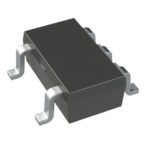 RS8557XF
The activity of extra discounts on wholesale prices is in full swing…
Please fill in your contact information and we will send you the latest wholesale price list.