 ChipApex | Global Electronic Components Supplier
SEARCH
Search Product
Search Post
— IC芯片 | 连接器 | 传感器 | 被动器件 —
Search productSearch post
— IC芯片 | 连接器 | 传感器 | 被动器件 —
Consult the customer manager about the wholesale price.
consultation hotline:86-132-6715-2157
email:[email protected]
Contact the product manager for consultation. One-stop consultation is available.
Do you want a lower wholesale price? Please send us your inquiry and we will reply immediately.
The RSX1001T3 is a silicon epitaxial planer Schottky barrier diode manufactured by ROHM Semiconductor. It features a cathode common configuration housed in a TO-220 package. The device supports a repetitive peak reverse voltage of 30 V and an average rectified forward current of 10 A at a case temperature of 132°C. Key electrical characteristics include a maximum forward voltage of 0.45 V at 5 A, a maximum reverse current of 500 µA at 30 V, and a junction-to-case thermal resistance of 2.5 °C/W. The component operates within a junction temperature range up to 150°C.
Verify the specific ordering suffix against the manufacturer's official documentation to ensure correct packaging and tape specifications. Confirm that the TO-220 package dimensions align with your PCB layout requirements. Check for RoHS compliance status in the latest datasheet revision before finalizing procurement orders.
Select this component for applications requiring a single Schottky diode with a 30 V rating and 10 A continuous current capability. Ensure the thermal management design can maintain the case temperature at or below 132°C to sustain the rated average forward current. Consider the low forward voltage drop for improved power conversion efficiency in switching circuits.
This part belongs to the RSX series of Schottky barrier diodes from ROHM Semiconductor. These devices are engineered for general-purpose rectification and switching applications where low forward voltage and fast switching speeds are critical. The TO-220 package provides robust mechanical stability and efficient heat dissipation capabilities suitable for medium-power electronics.
Consult the official ROHM replacement guide for verified substitutes. Ensure any alternative maintains the same TO-220 footprint, 30 V reverse voltage rating, and 10 A current handling capacity.
The maximum operating junction temperature is 150°C.
The average rectified forward current is rated at 10 A when the case temperature is maintained at 132°C.
The datasheet specifies a typical reverse recovery time of approximately 17.2 ns under standard test conditions.
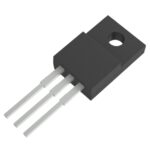 RSX1001T3
The activity of extra discounts on wholesale prices is in full swing…
Please fill in your contact information and we will send you the latest wholesale price list.





