ChipApex | Global Electronic Components Supplier
SEARCH
Search Product
Search Post
— IC芯片 | 连接器 | 传感器 | 被动器件 —
Search productSearch post
— IC芯片 | 连接器 | 传感器 | 被动器件 —
Consult the customer manager about the wholesale price.
consultation hotline:86-132-6715-2157
email:[email protected]
Contact the product manager for consultation. One-stop consultation is available.
Do you want a lower wholesale price? Please send us your inquiry and we will reply immediately.
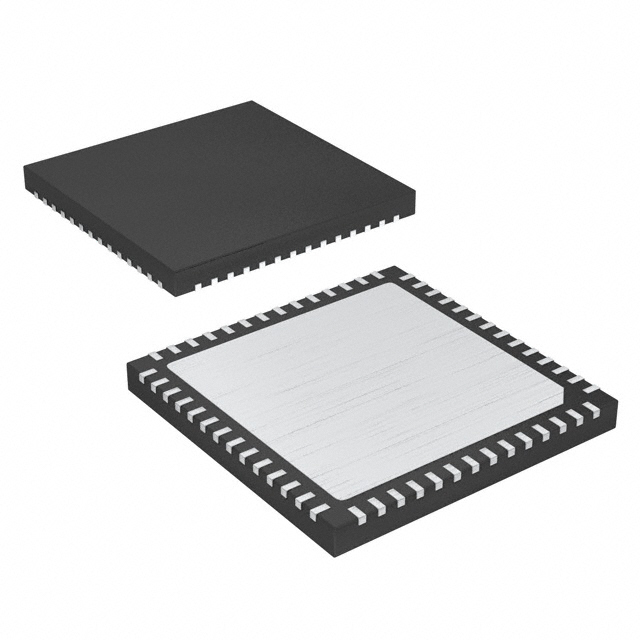
The RT5028DGQW is a highly integrated low-power high-performance analog System-on-Chip (SoC) featuring a Power Management IC (PMIC) designed for industrial applications. It integrates four synchronous step-down DC-DC converters and eight Low-Dropout (LDO) regulators to provide comprehensive system power solutions. The device includes an embedded MTP non-volatile memory for configuring sequence and timing parameters, alongside an IRQ report function. Input voltage ranges from 2.5 V to 5.5 V. Output capabilities include adjustable voltages such as 0.7 V to 1.8 V with up to 2.4 A current, and 0.7 V to 3.6 V with up to 1.6 A current. The switching frequency spans 500 kHz to 2 MHz. It operates within a temperature range of -40°C to 85°C and utilizes a 56-WQFN (7x7) package.
Verify the specific suffix 'DGQW' against the manufacturer's official datasheet to confirm pinout and thermal pad specifications. Ensure that the required output currents and voltage levels align with the integrated buck and LDO channels. Confirm that the industrial temperature rating meets the operational environment requirements. Check for any specific ordering suffixes that might alter the internal memory configuration or package variant. Always reference the latest Richtek Technology Corporation documentation for accurate electrical characteristics.
Select this component when a compact solution is needed to replace multiple discrete regulators. The integration of both switching converters and linear regulators allows for optimized efficiency and noise performance across different rails. Consider the MTP feature if dynamic reconfiguration of power sequences is required during production or operation. Evaluate the 56-pin WQFN footprint against available PCB space. Ensure the input voltage range matches the system's primary power source availability.
The RT5028DGQW belongs to the RT5028D series of integrated PMICs from Richtek Technology Corporation. This series is specifically engineered for industrial applications requiring high integration and reliability. It consolidates power management functions into a single SoC, reducing board space and simplifying design complexity compared to using individual regulator components.
Publicly confirmed substitute part numbers are not available in the provided source material. Verify compatibility with existing designs by comparing pinouts and electrical specifications directly with the manufacturer's cross-reference data.
 RT5028DGQW
The activity of extra discounts on wholesale prices is in full swing…
Please fill in your contact information and we will send you the latest wholesale price list.