 ChipApex | Global Electronic Components Supplier
SEARCH
Search Product
Search Post
— IC芯片 | 连接器 | 传感器 | 被动器件 —
Search productSearch post
— IC芯片 | 连接器 | 传感器 | 被动器件 —
Consult the customer manager about the wholesale price.
consultation hotline:86-132-6715-2157
email:[email protected]
Contact the product manager for consultation. One-stop consultation is available.
Do you want a lower wholesale price? Please send us your inquiry and we will reply immediately.
The RT6576AGQW is a dual-channel synchronous DC/DC step-down controller manufactured by Richtek Technology Corporation. It integrates two independent buck channels with an internal 5V and 3.3V Low Dropout (LDO) regulator, providing four total outputs in a single package. The device operates within a supply voltage range of 5V to 25V and supports switching frequencies of 300kHz and 355kHz for the respective buck channels. Designed for surface-mount installation, it utilizes a 20-WQFN (3x3mm) package with an exposed pad for thermal dissipation. The component functions as a PMIC suitable for applications requiring combined switching and linear regulation.
Verify the specific suffix 'GQW' corresponds to the required 20-WQFN(3x3) package configuration during sourcing. Confirm that the integrated LDO outputs meet the load requirements for your specific application, as these are fixed voltage rails. Ensure compatibility with the specified input voltage range of 5V to 25V before finalizing procurement decisions.
Select this component when a design requires two adjustable buck outputs alongside fixed low-power LDO rails within a minimal footprint. It is appropriate for systems where space is limited but multiple voltage domains are necessary. Consider the thermal performance of the WQFN package relative to the expected power dissipation of the integrated LDOs and buck channels under maximum load conditions.
This part belongs to the RT6575/RT6576 family of dual-channel controllers from Richtek. These devices are designed to replace discrete solutions by combining switching and linear regulation. The RT6576 variant specifically includes the integrated LDOs, distinguishing it from pure switching controllers in the same series. It serves as a consolidated power management solution for complex multi-rail systems.
The RT6575A, RT6575B, and RT6575C are documented variants within the same functional family. Verify if the specific LDO integration or frequency settings of the RT6576AGQW are strictly required, as other family members may offer different output configurations.
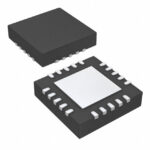 RT6576AGQW
The activity of extra discounts on wholesale prices is in full swing…
Please fill in your contact information and we will send you the latest wholesale price list.





