 ChipApex | Global Electronic Components Supplier
SEARCH
Search Product
Search Post
— IC芯片 | 连接器 | 传感器 | 被动器件 —
Search productSearch post
— IC芯片 | 连接器 | 传感器 | 被动器件 —
Consult the customer manager about the wholesale price.
consultation hotline:86-132-6715-2157
email:[email protected]
Contact the product manager for consultation. One-stop consultation is available.
Do you want a lower wholesale price? Please send us your inquiry and we will reply immediately.
The RT7300GS is a Critical Conduction Mode (CRM) Power Factor Correction controller manufactured by Richtek USA Inc. It operates with a switching frequency of 120kHz and supports an input voltage range of 12V to 25V. The device features a current startup threshold of 20 µA and is designed for operation within a temperature range of -40°C to 125°C. Packaged in an 8-SOIC format with a width of 3.90mm, it integrates essential control logic for efficient PFC applications without requiring external complex compensation networks.
Verify the specific suffix GS against the manufacturer's official datasheet to confirm pinout compatibility and thermal specifications. Ensure that the 8-SOIC package dimensions match the target PCB footprint requirements. Cross-reference the date code and marking information provided on the component surface with the production batch records to guarantee authenticity and traceability before integration into final assemblies.
Select this component when designing systems requiring CRM-based PFC solutions with moderate switching frequencies. The 120kHz operation balances electromagnetic interference considerations with efficiency targets. Evaluate the 12V to 25V supply range against the system's auxiliary power availability. Consider the -40°C to 125°C operating window for environmental robustness in industrial or automotive adjacent applications where standard commercial grades may be insufficient.
This part belongs to Richtek's portfolio of power management integrated circuits, specifically targeting AC-DC conversion stages. As a CRM PFC controller, it complements other Richtek components like the RT7304 LED driver by providing upstream power quality improvement. The family focuses on cost-effective, high-efficiency solutions for global energy standards compliance.
Public confirmed substitute part numbers are not available in the provided documentation. Verify functional equivalence carefully if considering alternatives from other manufacturers, as CRM control algorithms and protection thresholds may differ significantly.
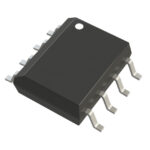 RT7300GS
The activity of extra discounts on wholesale prices is in full swing…
Please fill in your contact information and we will send you the latest wholesale price list.





