 ChipApex | Global Electronic Components Supplier
SEARCH
Search Product
Search Post
— IC芯片 | 连接器 | 传感器 | 被动器件 —
Search productSearch post
— IC芯片 | 连接器 | 传感器 | 被动器件 —
Consult the customer manager about the wholesale price.
consultation hotline:86-132-6715-2157
email:[email protected]
Contact the product manager for consultation. One-stop consultation is available.
Do you want a lower wholesale price? Please send us your inquiry and we will reply immediately.
The Semitec USA Corp S-102T is a surface-mount current regulating diode (CRD) designed to maintain a constant current flow despite voltage fluctuations. It operates within a wide voltage range from less than 1V to 100V and delivers a typical pinch-off current of 1.0 mA at 10V, with a minimum of 0.88 mA and maximum of 1.3 mA. The device features a rated power of 500 mW and a maximum rated voltage of 100 V. It functions reliably across an operating temperature range of -40°C to +150°C, with a junction temperature limit of 150°C. The component utilizes a 2-SMD flat lead package for surface mount technology applications.
Verify the specific ordering suffix corresponds to the required taping method, as 'T' indicates SMD reel taping. Confirm that the selected part number aligns with the desired pinch-off current rating of 1.0 mA. Ensure compatibility with the recommended mounting pad dimensions specified for the S series components to guarantee proper soldering and thermal performance during assembly.
Select this component when a simple, single-part solution is needed for constant current regulation without complex circuitry. Consider the 500 mW power rating and 100 V maximum voltage limits when designing for higher power or voltage scenarios. Evaluate the temperature coefficient range of -0.10% to -0.37% per degree Celsius if precise current stability across varying temperatures is critical for the application.
The S-102T belongs to the S series of current regulating diodes from Semitec, which are surface-mount variants of the axial E series. This series is engineered for compact designs where space is limited. The S series shares similar electrical characteristics with the E series but offers advantages in automated assembly processes due to its SMD packaging format, facilitating integration into modern printed circuit board manufacturing workflows.
The E-102 is the axial leaded equivalent within the same product family. When substituting, verify that the PCB layout accommodates the different package type and that the thermal and mechanical constraints of the new component meet the design requirements.
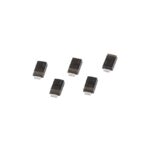 S-102T
The activity of extra discounts on wholesale prices is in full swing…
Please fill in your contact information and we will send you the latest wholesale price list.





