 ChipApex | Global Electronic Components Supplier
SEARCH
Search Product
Search Post
— IC芯片 | 连接器 | 传感器 | 被动器件 —
Search productSearch post
— IC芯片 | 连接器 | 传感器 | 被动器件 —
Consult the customer manager about the wholesale price.
consultation hotline:86-132-6715-2157
email:[email protected]
Contact the product manager for consultation. One-stop consultation is available.
Do you want a lower wholesale price? Please send us your inquiry and we will reply immediately.
The S-1111B39MC-NYYTFG is a positive voltage regulator from the S-1111/1121 Series developed by Seiko Instruments Inc. It provides a fixed output voltage of 3.9 V with an accuracy of ±1.0%. The device operates within an input voltage range of 2.0 V to 6.5 V and supports an output current of up to 150 mA. Typical dropout voltage is 0.20 V at 100 mA, and ripple rejection is 70 dB at 1.0 kHz. Current consumption is 35 μA during operation and 0.1 μA in power-off mode. It features built-in overcurrent protection and an ON/OFF circuit, housed in an SOT-23-5 package.
Verify the specific ordering suffix against the manufacturer's product name structure documentation to confirm pin configuration and environmental codes. Confirm that the component meets RoHS and halogen-free requirements as specified in the datasheet. Ensure compatibility with the SOT-23-5 package footprint and tape reel specifications for surface mount assembly processes.
Select this component for applications requiring a fixed 3.9 V output with high accuracy. Ensure the input voltage remains at least 1.0 V above the output voltage for optimal performance. Verify that the external output capacitor has an ESR within the recommended range to prevent oscillation. Consider the thermal dissipation capabilities of the SOT-23-5 package under maximum load conditions.
This part belongs to the S-1111/1121 Series of CMOS voltage regulators manufactured by Seiko Instruments Inc. The series is characterized by high ripple rejection and low dropout voltage. The S-1111 variant specifically utilizes a pin configuration where Pin 1 is VIN and Pin 3 is the ON/OFF control pin, distinguishing it from the S-1121 series which swaps these positions.
S-1111B39MC-NYATFx (Negative logic ON/OFF pin)
Pin 4 is designated as NC (No Connection) and is electrically open. It can be connected to the VIN pin or the VSS pin if necessary for mounting purposes.
For the 'B' type product like this model, setting the ON/OFF pin to a High level turns the regulator ON, while setting it to a Low level turns it OFF, stopping internal circuits and reducing current consumption.
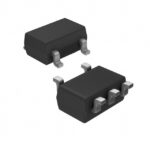 S-1111B39MC-NYYTFG
The activity of extra discounts on wholesale prices is in full swing…
Please fill in your contact information and we will send you the latest wholesale price list.



