 ChipApex | Global Electronic Components Supplier
SEARCH
Search Product
Search Post
— IC芯片 | 连接器 | 传感器 | 被动器件 —
Search productSearch post
— IC芯片 | 连接器 | 传感器 | 被动器件 —
Consult the customer manager about the wholesale price.
consultation hotline:86-132-6715-2157
email:[email protected]
Contact the product manager for consultation. One-stop consultation is available.
Do you want a lower wholesale price? Please send us your inquiry and we will reply immediately.
The S-8520F33MC-BNST2U is a CMOS step-down switching regulator controller from the S-8520 Series by ABLIC Inc. It utilizes Pulse Width Modulation (PWM) control to provide low-ripple power and high efficiency. The device features a fixed output voltage of 3.3 V and operates with a switching frequency of 300 kHz. It supports an input voltage range of 2.5 V to 16 V and consumes a typical quiescent current of 100 uA. The component is housed in a compact SOT-23 package, suitable for surface mount applications within an operating temperature range of -40°C to +85°C.
Verify the specific suffix BNST2U against official ABLIC documentation to confirm pinout and marking details. Ensure external components such as the inductor, diode, and capacitors are selected according to the datasheet recommendations for stability at 3.3V output. Confirm RoHS compliance status through the manufacturer's latest environmental reports before finalizing procurement.
Select this controller when a fixed 3.3V output is required without adjustable feedback networks. It is appropriate for designs prioritizing simplicity and cost-efficiency over variable output flexibility. Consider the 100 uA quiescent current impact on standby power budgets. Verify that the external switch component can handle the peak currents associated with the 300 kHz PWM operation within the specified thermal limits.
This component belongs to the S-8520 Series, which consists of CMOS step-down switching regulator controllers featuring PWM control. The series is designed to work with external power switches to create complete DC-DC converter solutions. It distinguishes itself from the S-8521 series by lacking PFM mode, focusing instead on consistent PWM performance for applications where ripple reduction is critical.
The S-8520F33MC-BNAT2U is a documented variant within the same series offering similar PWM functionality. Cross-reference pinouts and marking codes carefully. No direct equivalent substitutes are confirmed in public data; design changes may be required if interface differences exist.
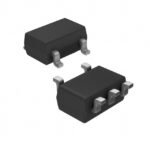 S-8520F33MC-BNST2U
The activity of extra discounts on wholesale prices is in full swing…
Please fill in your contact information and we will send you the latest wholesale price list.




