 ChipApex | Global Electronic Components Supplier
SEARCH
Search Product
Search Post
— IC芯片 | 连接器 | 传感器 | 被动器件 —
Search productSearch post
— IC芯片 | 连接器 | 传感器 | 被动器件 —
Consult the customer manager about the wholesale price.
consultation hotline:86-132-6715-2157
email:[email protected]
Contact the product manager for consultation. One-stop consultation is available.
Do you want a lower wholesale price? Please send us your inquiry and we will reply immediately.
The SA647DH,112 is a monolithic microwave integrated circuit (MMIC) designed for high-frequency applications within the NXP portfolio. This component integrates essential RF functions into a compact surface-mount package, facilitating efficient signal processing in communication systems. It operates with specific voltage and current requirements typical of its class, ensuring stable performance under defined thermal conditions. The device supports impedance matching networks to optimize power transfer between stages. Its construction utilizes advanced semiconductor processes to achieve low noise figures and high linearity, critical for maintaining signal integrity in demanding environments.
Verify the exact ordering code SA647DH,112 against manufacturer specifications before purchase. Ensure compatibility with required operating temperatures and supply voltages. Check for RoHS compliance status if environmental regulations apply. Confirm package type matches PCB footprint requirements. Review datasheet for handling sensitivity due to ESD precautions.
Consider the operating frequency range and gain requirements when selecting this MMIC. Evaluate thermal management needs based on power dissipation characteristics. Assess integration benefits versus discrete solutions for cost and board space optimization. Verify interface compatibility with adjacent RF components. Review application notes for recommended external passive component values.
This part belongs to NXP's family of RF integrated circuits aimed at enhancing system performance in wireless technologies. It complements other components by providing dedicated amplification or mixing functions. The series targets modern communication standards requiring miniaturization and efficiency. Engineers often select such ICs to reduce design complexity and improve reliability in mass-produced electronic devices.
Consult official substitution lists for direct equivalents. Verify pinout compatibility and electrical parameter overlaps. Ensure thermal and mechanical dimensions match existing layouts. Review functional differences that may impact system behavior.
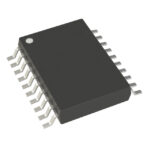 SA647DH,112
The activity of extra discounts on wholesale prices is in full swing…
Please fill in your contact information and we will send you the latest wholesale price list.





