ChipApex | Global Electronic Components Supplier
SEARCH
Search Product
Search Post
— IC芯片 | 连接器 | 传感器 | 被动器件 —
Search productSearch post
— IC芯片 | 连接器 | 传感器 | 被动器件 —
Consult the customer manager about the wholesale price.
consultation hotline:86-132-6715-2157
email:[email protected]
Contact the product manager for consultation. One-stop consultation is available.
Do you want a lower wholesale price? Please send us your inquiry and we will reply immediately.
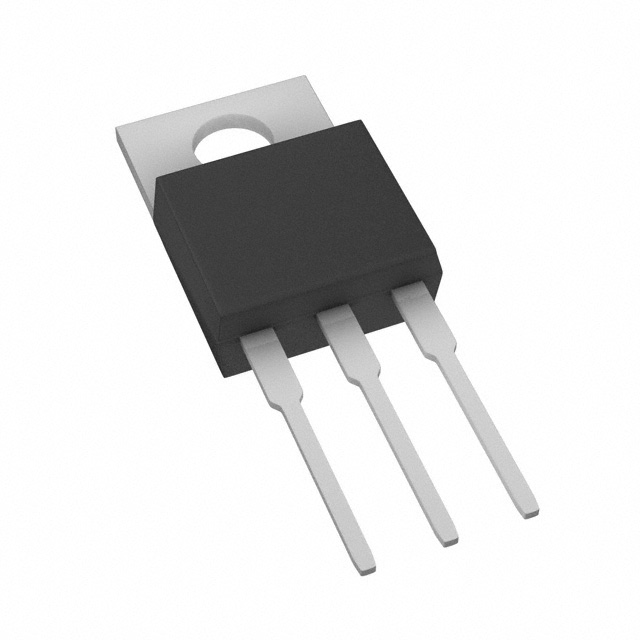
The SB1040CT_T0_00001 is a Schottky barrier rectifier from the SB1020CT series manufactured by Panjit International Inc. It features a TO-220AB molded plastic case and provides a maximum average forward current of 10 A at a case temperature of 100°C. The device has a maximum recurrent peak reverse voltage of 40 V and a typical thermal resistance of 3.0°C/W. Electrical characteristics include a maximum forward voltage of 0.75 V at 5 A per leg, a peak forward surge current of 150 A, and an operating junction temperature range of -50 to +125°C.
Verify the specific ordering suffix against official documentation to confirm packaging type and compliance status. The provided datasheet indicates that suffix codes define packing methods such as tape and reel or bulk tube, alongside halogen-free or RoHS compliance levels. Confirm the exact version code matches project requirements before procurement.
Select this component for circuits requiring a 40 V blocking voltage and 10 A continuous current handling capability. Ensure the application maintains the case temperature below 100°C to sustain the rated average forward current. Consider the 3.0°C/W thermal resistance for heat dissipation planning in the final assembly design.
This part belongs to the SB1020CT~SB1060CT series of Schottky barrier rectifiers produced by Panjit International Inc. The series covers voltage ratings from 20 V to 60 V while maintaining a consistent 10 A current rating across all variants. The SB1040CT specifically addresses the 40 V requirement within this standardized product line.
Cross-reference with other manufacturers offering 10 A, 40 V Schottky rectifiers in the TO-220AB package. Verify pinout compatibility and thermal resistance specifications to ensure equivalent performance in existing designs.
The maximum DC blocking voltage is 40 V.
The maximum forward voltage at 5 A per leg increases with higher voltage ratings; it is 0.55 V for the 20 V variant and 0.75 V for the 40 V variant.
No, Panjit explicitly states these products are not designed for equipment requiring high reliability or relating to human life, such as medical instruments.
 SB1040CT_T0_00001
The activity of extra discounts on wholesale prices is in full swing…
Please fill in your contact information and we will send you the latest wholesale price list.