 ChipApex | Global Electronic Components Supplier
SEARCH
Search Product
Search Post
— IC芯片 | 连接器 | 传感器 | 被动器件 —
Search productSearch post
— IC芯片 | 连接器 | 传感器 | 被动器件 —
Consult the customer manager about the wholesale price.
consultation hotline:86-132-6715-2157
email:[email protected]
Contact the product manager for consultation. One-stop consultation is available.
Do you want a lower wholesale price? Please send us your inquiry and we will reply immediately.
The SBR433M920S021 is a Surface Acoustic Wave (SAW) resonator manufactured by NextGen Components. It operates at a nominal frequency of 433.92 MHz with a frequency tolerance of ±50 kHz. The device features a 50 Ohm impedance and a maximum insertion loss of 2.0 dB. It is designed for surface mount applications, utilizing a 6-pad configuration within the SBR series. The physical dimensions are specified as L3.8mm x W3.8mm x H1.50mm, corresponding to the 3838 package type. The component supports an operating temperature range of -40°C to +85°C.
Verify the specific ordering suffix against official NextGen Components documentation to ensure correct frequency tolerance and packaging specifications. Confirm that the required frequency stability aligns with system requirements, as standard variants may differ. Check for active product status confirmation prior to procurement to avoid obsolescence risks. Ensure compatibility with automated pick-and-place equipment given the small surface mount footprint.
Select this component when a stable 433.92 MHz reference is required for ISM band applications. Consider the ±50 kHz tolerance relative to channel spacing requirements in the target design. Evaluate the thermal management capabilities of the PCB layout to maintain operation within the -40°C to +85°C range. Compare insertion loss specifications against transmitter power budgets to ensure signal integrity.
This part belongs to the SBR series of SAW resonators from NextGen Components. It is distinct from crystal oscillators or filters, serving specifically as a passive resonant element. The 3838 package size allows for high-density mounting on printed circuit boards. It complements other components in the SBR family which offer different frequencies and pad configurations.
Direct substitutes must match the 433.92 MHz frequency, 50 Ohm impedance, and 3838 package dimensions. Verify pinout compatibility for the six-pad configuration. Cross-reference with other manufacturers' SAW resonators offering identical frequency tolerances and insertion loss characteristics.
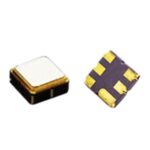 SBR433M920S021
The activity of extra discounts on wholesale prices is in full swing…
Please fill in your contact information and we will send you the latest wholesale price list.





