 ChipApex | Global Electronic Components Supplier
SEARCH
Search Product
Search Post
— IC芯片 | 连接器 | 传感器 | 被动器件 —
Search productSearch post
— IC芯片 | 连接器 | 传感器 | 被动器件 —
Consult the customer manager about the wholesale price.
consultation hotline:86-132-6715-2157
email:[email protected]
Contact the product manager for consultation. One-stop consultation is available.
Do you want a lower wholesale price? Please send us your inquiry and we will reply immediately.
The SBR868M350S024 is a Surface Acoustic Wave (SAW) resonator manufactured by NextGen Components, designed for Sub-GHz wireless applications. It operates at a nominal center frequency of 868.35 MHz with a frequency tolerance of ±150 kHz. The device features a standard 3838 surface-mount package measuring 3.8 mm x 3.8 mm x 1.5 mm and utilizes a six-pin configuration. Key electrical specifications include an insertion loss of up to 2.0 dB, an unloaded Q factor of 9400, and a loaded Q factor of 1500 at 50 Ohms. It supports a maximum RF power of 15 dBm and exhibits an annual aging rate of ≤±10 ppm. The component functions within a temperature range of -40°C to +85°C.
Verify the specific ordering suffix against the manufacturer's official documentation to ensure correct pinout and functional parameters. Confirm that the requested variant matches the required 3838 package dimensions and six-terminal configuration. Ensure compliance with RoHS III environmental standards if applicable to the target assembly. Cross-reference the frequency tolerance requirements with the system's demodulation sensitivity limits before finalizing the procurement order.
Select this component when designing for EU868 band protocols requiring precise frequency stability without external calibration. The high unloaded Q factor makes it suitable for applications demanding low phase noise and fast startup times. Consider the thermal characteristics and aging rate for long-term deployments in outdoor or automotive environments where frequency drift must remain within strict operational bounds over several years.
This SAW resonator belongs to NextGen Components' line of acoustic devices, which includes filters, discriminators, and crystal oscillators. The company specializes in electronic components for general-purpose and specialized industrial applications. The SBR series represents their surface-mount solutions optimized for compact PCB layouts and automated assembly processes common in modern consumer and industrial electronics manufacturing.
Publicly confirmed substitute part numbers are not available in the provided documentation. Designers should consult the manufacturer directly for approved equivalents or verify compatibility through rigorous electrical testing if considering alternative suppliers.
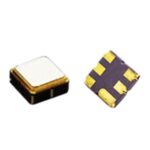 SBR868M350S024
The activity of extra discounts on wholesale prices is in full swing…
Please fill in your contact information and we will send you the latest wholesale price list.





