 ChipApex | Global Electronic Components Supplier
SEARCH
Search Product
Search Post
— IC芯片 | 连接器 | 传感器 | 被动器件 —
Search productSearch post
— IC芯片 | 连接器 | 传感器 | 被动器件 —
Consult the customer manager about the wholesale price.
consultation hotline:86-132-6715-2157
email:[email protected]
Contact the product manager for consultation. One-stop consultation is available.
Do you want a lower wholesale price? Please send us your inquiry and we will reply immediately.
The SCAN921224SLC/NOPB is a 10-bit deserializer from the Texas Instruments SCAN921224 series, designed for serial-to-parallel data conversion. It accepts a single LVDS input channel and converts it into ten LVTTL output channels. The device supports a maximum data rate of 660 Mb/s and operates within a supply voltage range of 3 V to 3.6 V, typically at 3.3 V. It functions reliably across an industrial temperature range of -40°C to +85°C. Housed in a 49-ball FBGA package, the component draws approximately 90 mA during operation with a power dissipation of 1.47 W.
Verify the complete part number including the suffix /NOPB when ordering, as it indicates lead-free compliance and specific packaging configuration. Confirm that the required data rate does not exceed 660 Mb/s for this specific variant. Ensure the design accommodates the 49-ball FBGA footprint and thermal requirements associated with 1.47 W power dissipation. Check current availability status as production cycles may vary.
Select this component when a single-channel LVDS to 10-bit LVTTL conversion is required at speeds up to 660 Mb/s. Compare against the SCAN921226 if higher data rates up to 800 Mb/s are needed, noting the input type difference between LVDS and BLVDS. Ensure the application environment stays within the -40°C to +85°C operating range. Verify compatibility with existing clocking and termination schemes for LVDS inputs.
This device belongs to the SCAN921224 family of serializers and deserializers from Texas Instruments. It is categorized under Interface ICs and specifically serves as a deserializer within the Serdes product line. The component shares the same FBGA-49 package and general electrical characteristics with other members of the SCAN9212xx series, differing primarily in supported data rates and input/output signaling standards.
The SCAN921226SLC/NOPB is a related variant offering higher data rates up to 800 Mb/s but utilizes BLVDS input instead of LVDS. Direct pin-for-pin replacement requires verification of input signal compatibility. No other direct substitutes are confirmed in the provided documentation.
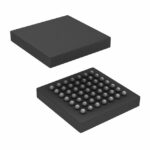 SCAN921224SLC
The activity of extra discounts on wholesale prices is in full swing…
Please fill in your contact information and we will send you the latest wholesale price list.






