ChipApex | Global Electronic Components Supplier

SEARCH
Search Product
Search Post
— IC芯片 | 连接器 | 传感器 | 被动器件 —
Search productSearch post
— IC芯片 | 连接器 | 传感器 | 被动器件 —
Consult the customer manager about the wholesale price.
consultation hotline:86-132-6715-2157
email:[email protected]
Contact the product manager for consultation. One-stop consultation is available.
Do you want a lower wholesale price? Please send us your inquiry and we will reply immediately.
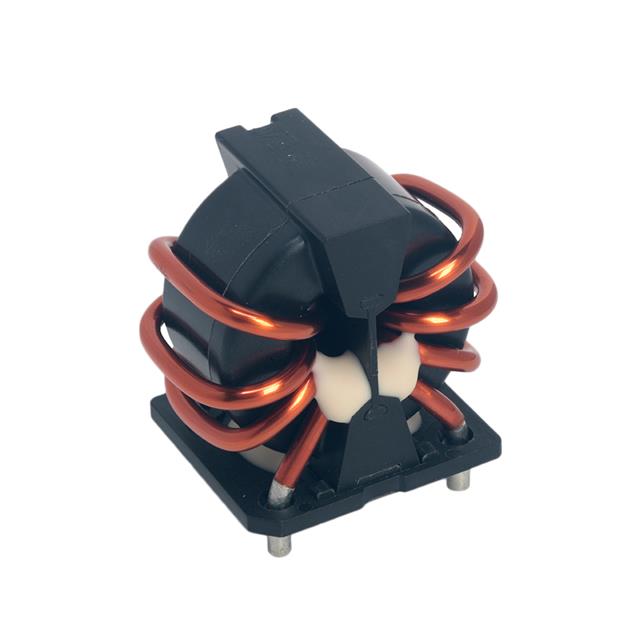
The KEMET SCF25XV-350-2R4A003JV is a dual common mode choke from the SCF series, designed for high-voltage automotive applications. It features an inductance of 220 µH (0.22 mH) and supports a maximum current of 35 A with a DC resistance of 0.65 mΩ. Rated for 1000 V AC/DC, it operates within a temperature range of -40 °C to +125 °C. The component utilizes a vertical through-hole radial leaded package measuring 35 x 38.5 x 26.5 mm and holds AEC-Q200 qualification.
Verify the specific suffix codes against official KEMET documentation to ensure correct inductance and tolerance specifications. Confirm that the AEC-Q200 qualification aligns with your project's automotive reliability requirements. Check physical dimensions against your PCB footprint design to ensure compatibility with the 35 x 38.5 x 26.5 mm body size and radial lead spacing.
Select this component when high current handling up to 35 A is required alongside significant common mode noise reduction. The 1000 V rating makes it suitable for isolated power stages where standard low-voltage chokes would fail. Ensure the operating environment stays within the -40 °C to +125 °C range. Consider the vertical form factor for board space constraints compared to horizontal alternatives.
This part belongs to KEMET’s SCF series of common mode chokes, which are engineered for high-performance filtering in power electronics. The SCF25XV variant specifically targets high-voltage automotive and industrial markets. It complements lower-current or lower-voltage variants within the same family by offering enhanced power handling capabilities while maintaining compact vertical packaging for space-efficient designs.
Consult official KEMET substitution guides for direct equivalents. Verify that any alternative maintains the 220 µH inductance, 35 A current rating, and 1000 V voltage rating. Ensure the replacement also meets AEC-Q200 standards if automotive compliance is mandatory. Physical dimensions and lead configurations must match to avoid PCB redesign.
 SCF25XV-350-2R4A003JV

The activity of extra discounts on wholesale prices is in full swing…
Please fill in your contact information and we will send you the latest wholesale price list.