 ChipApex | Global Electronic Components Supplier
SEARCH
Search Product
Search Post
— IC芯片 | 连接器 | 传感器 | 被动器件 —
Search productSearch post
— IC芯片 | 连接器 | 传感器 | 被动器件 —
Consult the customer manager about the wholesale price.
consultation hotline:86-132-6715-2157
email:[email protected]
Contact the product manager for consultation. One-stop consultation is available.
Do you want a lower wholesale price? Please send us your inquiry and we will reply immediately.
The Microchip Technology SCH3222-SX is a Super I/O controller designed for PC99 and PC2001 compliant systems. It features an LPC interface supporting bus frequencies of 19MHz to 33MHz and operates at 3.3V with a 5V-tolerant SIO block. The device integrates four full-function serial ports (NS16C550A compatible) and two additional 4-pin serial ports, alongside an IrDA 1.0 infrared port and an 8042 software-compatible keyboard/mouse controller. It includes hardware monitoring capabilities such as temperature sensing and fan control, along with power management logic including watchdog timer, reset generation, and programmable clock output.
Verify the specific suffix 'SX' against the manufacturer's current product identification system to confirm package type and temperature range. Ensure that configuration registers are not accessed if their corresponding pins are not brought out of the package to prevent unpredictable behavior or damage.
Select the SCH3222-SX when four full-function serial ports and an infrared port are required without parallel port support. Compare GPIO counts (23 total) and package size (84-ball WFBGA) against larger family members like the SCH3227 if pin count is a constraint.
The SCH3222 belongs to the SCH322x family, which succeeds the SCH311x series. Unlike the SCH3227 and SCH3226, the SCH3222 does not feature a STRAPOPT pin and is internally hard-wired to identify as the legacy SCH3116 code. It lacks the parallel port and hardware monitor found in other family variants.
The SCH3116 is the direct legacy predecessor identified by the internal Device ID register. Cross-referencing with the SCH3224 may be necessary if hardware monitoring or IDE reset outputs are required, though pinouts differ significantly.
No, the SCH3222 does not include a parallel port. This feature is available only in the SCH3227 and SCH3224 models within the same family.
The LPC interface supports bus frequencies ranging from 19MHz to 33MHz.
The SCH3222 provides 23 General Purpose I/O (GPIO) pins.
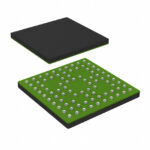 SCH3222-SX
The activity of extra discounts on wholesale prices is in full swing…
Please fill in your contact information and we will send you the latest wholesale price list.






