ChipApex | Global Electronic Components Supplier

SEARCH
Search Product
Search Post
— IC芯片 | 连接器 | 传感器 | 被动器件 —
Search productSearch post
— IC芯片 | 连接器 | 传感器 | 被动器件 —
Consult the customer manager about the wholesale price.
consultation hotline:86-132-6715-2157
email:[email protected]
Contact the product manager for consultation. One-stop consultation is available.
Do you want a lower wholesale price? Please send us your inquiry and we will reply immediately.
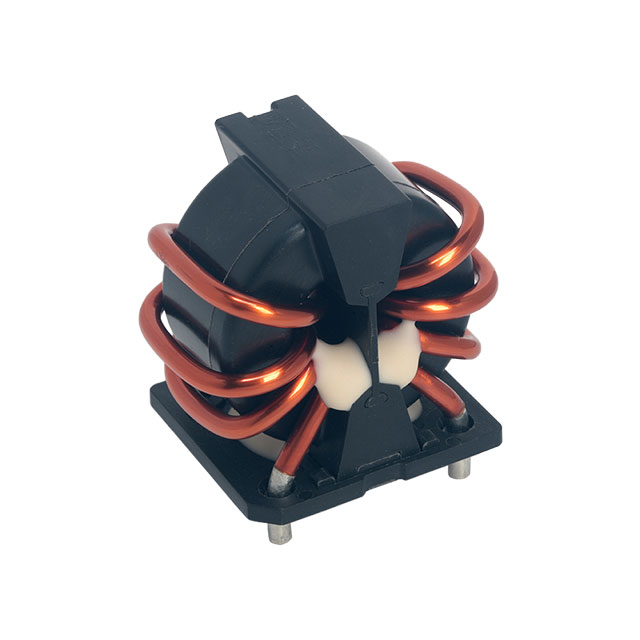
The KEMET SCR25XV-110-1R4A013JV is a two-line common mode choke designed for AC line filtering applications. It features an inductance of 2.1 mH at 100 kHz and supports a maximum current rating of 11 A. The component has a DC resistance (DCR) of 7.72 mOhms and operates within a voltage range up to 1000 V AC. It is constructed for through-hole mounting with dimensions of 26.5 x 35 x 38.5 mm. The device is qualified under the AEC-Q200 standard, ensuring reliability for automotive environments across an operating temperature range of -40°C to 120°C.
Verify the complete part number including suffixes to ensure correct inductance and tolerance specifications. Confirm that the through-hole package dimensions fit the target PCB layout. Check for AEC-Q200 certification requirements if used in automotive systems. Ensure voltage ratings meet system operational peaks. Validate thermal performance within the specified -40°C to 120°C range during integration.
Select this component when high current capacity and low impedance are required for common mode noise attenuation. The 2.1 mH inductance provides effective filtering at standard switching frequencies. Consider the vertical form factor for space-constrained assemblies. Verify compatibility with automated insertion equipment due to the radial leaded design. Ensure the 1000 V rating exceeds maximum circuit voltages.
This part belongs to the KEMET SCR25XV series of automotive-grade common mode chokes. The series is designed for robust performance in harsh environments. These coils are engineered to meet stringent automotive quality standards. They provide reliable electromagnetic interference suppression for critical vehicle systems. The specific model offers optimized inductance and current characteristics for modern power architectures.
Consult official substitution lists for equivalent inductance and current ratings. Verify pinout compatibility before replacing. Ensure mechanical dimensions allow for direct interchangeability. Confirm that alternative components meet AEC-Q200 requirements if automotive use is intended.
 SCR25XV-110-1R4A013JV

The activity of extra discounts on wholesale prices is in full swing…
Please fill in your contact information and we will send you the latest wholesale price list.