ChipApex | Global Electronic Components Supplier

SEARCH
Search Product
Search Post
— IC芯片 | 连接器 | 传感器 | 被动器件 —
Search productSearch post
— IC芯片 | 连接器 | 传感器 | 被动器件 —
Consult the customer manager about the wholesale price.
consultation hotline:86-132-6715-2157
email:[email protected]
Contact the product manager for consultation. One-stop consultation is available.
Do you want a lower wholesale price? Please send us your inquiry and we will reply immediately.
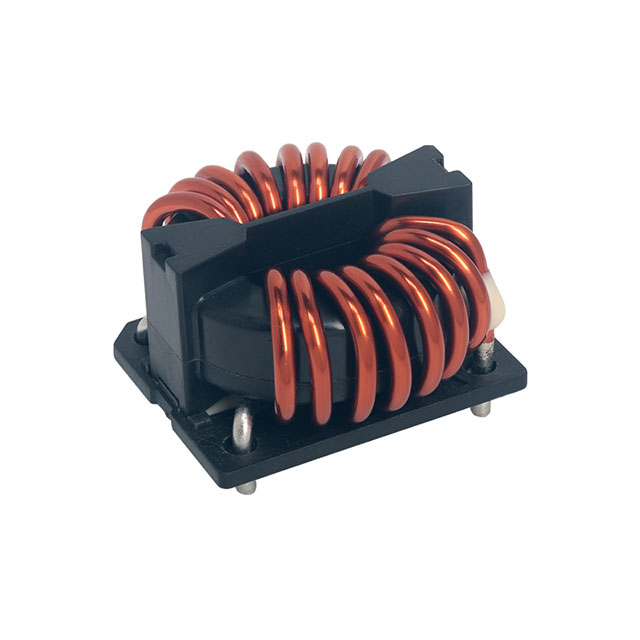
The KEMET SCR39XV-120-1R6A024JH is a single-phase common mode choke designed for through-hole mounting. It features an inductance of 7.6 mH at 100 kHz and supports a DC current rating of 12 A. The component has a maximum DC resistance of 0.0136 ohms and operates within a temperature range from -40°C to +125°C. It is rated for 1000 V and complies with AEC-Q200 standards, making it suitable for automotive applications requiring robust electromagnetic interference suppression.
Verify the specific inductance value (7.6 mH) against design requirements, as some sources may list variants with different values like 4.8 mH or 14.4 mH. Confirm the package type is through-hole axial/radial leaded as specified. Ensure the voltage rating of 1000 V meets system isolation needs. Check for AEC-Q200 compliance if automotive use is intended. Cross-reference the manufacturer part number to avoid confusion with similar series codes.
Select this component when high current capacity (12 A) and significant inductance (7.6 mH) are required for common mode noise reduction. Consider the low DC resistance (0.0136 ohms) for minimizing power loss. Evaluate the operating temperature range (-40°C to 125°C) for environmental suitability. Compare with other KEMET XV series chokes for size and performance trade-offs. Ensure the through-hole mounting method fits the PCB layout constraints.
This component belongs to the KEMET SCR39XV series of common mode chokes, which are engineered for demanding automotive and industrial applications. The series offers various inductance and current ratings to suit different circuit requirements. These chokes are characterized by their robust construction and compliance with strict automotive quality standards, ensuring reliability in harsh operating conditions.
Check for direct substitutes within the KEMET SCR39XV series with matching 7.6 mH inductance and 12 A rating. Verify that any alternative component maintains the same 1000 V rating and through-hole package dimensions. Ensure the replacement also meets AEC-Q200 standards if used in automotive contexts. Compare DC resistance values to ensure no significant increase in power loss.
 SCR39XV-120-1R6A024JH

The activity of extra discounts on wholesale prices is in full swing…
Please fill in your contact information and we will send you the latest wholesale price list.