 ChipApex | Global Electronic Components Supplier

SEARCH
Search Product
Search Post
— IC芯片 | 连接器 | 传感器 | 被动器件 —
Search productSearch post
— IC芯片 | 连接器 | 传感器 | 被动器件 —
Consult the customer manager about the wholesale price.
consultation hotline:86-132-6715-2157
email:[email protected]
Contact the product manager for consultation. One-stop consultation is available.
Do you want a lower wholesale price? Please send us your inquiry and we will reply immediately.
The SDCW2012C-2-900TF is a two-line surface mount common mode choke manufactured by Shenzhen Sunlord Electronics Co., Ltd. It features a wound structure with a low-profile design, providing effective suppression of high-frequency common-mode noise. The component operates within a temperature range of -40°C to +85°C and has a rated voltage of 50V. Key electrical parameters include an impedance of 90Ω at 100MHz, a maximum current rating of 330mA, and a DC resistance (DCR) of 350mΩ. It utilizes a compact SMD-4P package measuring 2x1.2mm.
Verify the specific ordering suffix and packaging configuration against the manufacturer's latest datasheet before finalizing procurement orders. Ensure that the selected variant matches the required impedance tolerance and current rating specifications for the target application circuit. Confirm compliance with relevant environmental standards such as RoHS requirements during the sourcing process.
Select this component when designing circuits requiring common mode noise suppression for differential data lines with moderate current demands. The 90Ω impedance at 100MHz makes it suitable for USB 2.0 applications. Consider the 330mA current rating and 350mΩ DCR to ensure minimal signal loss and thermal management within the system constraints.
Shenzhen Sunlord Electronics Co., Ltd. is a specialized manufacturer of chip electronic components, including magnetic devices, microwave devices, and sensitive devices. Established in 2000 and listed on the Shenzhen Stock Exchange, the company serves various sectors such as communications, consumer electronics, automotive electronics, and industrial electronics with a focus on quality and technological innovation.
Consult official substitution lists from Shenzhen Sunlord Electronics Co., Ltd. for verified equivalent part numbers. Ensure any replacement maintains identical impedance characteristics, current ratings, and physical footprint dimensions to guarantee compatibility with existing PCB designs and circuit performance requirements.
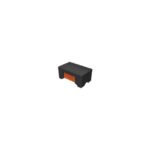 SDCW2012C-2-900TF

The activity of extra discounts on wholesale prices is in full swing…
Please fill in your contact information and we will send you the latest wholesale price list.






