ChipApex | Global Electronic Components Supplier
SEARCH
Search Product
Search Post
— IC芯片 | 连接器 | 传感器 | 被动器件 —
Search productSearch post
— IC芯片 | 连接器 | 传感器 | 被动器件 —
Consult the customer manager about the wholesale price.
consultation hotline:86-132-6715-2157
email:[email protected]
Contact the product manager for consultation. One-stop consultation is available.
Do you want a lower wholesale price? Please send us your inquiry and we will reply immediately.
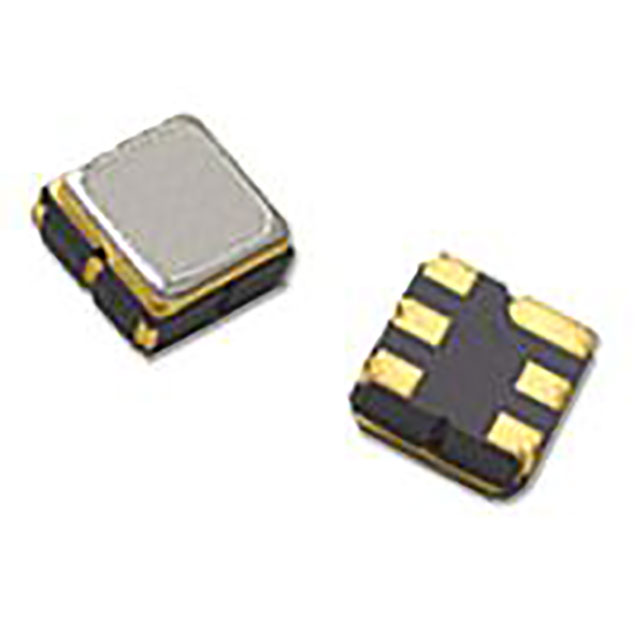
The SF2173E is a Surface Acoustic Wave (SAW) bandpass filter manufactured by RFMi. It operates at a center frequency of 2350 MHz with a bandwidth of 100 MHz, covering the range from 2300 to 2400 MHz. The device features a typical insertion loss of 3 dB and provides high attenuation, specified as 40 dB at 2250 MHz and 38 dB at 2450 MHz. It supports a maximum voltage rating of 3 V and utilizes a surface-mount technology package measuring 3.0 mm by 3.0 mm with a height of 1.25 mm.
Verify the specific manufacturing date code and lot traceability upon order confirmation. Ensure that the procurement channel provides original manufacturer documentation to confirm authenticity. Check for any specific handling requirements related to electrostatic discharge protection during storage and transportation. Confirm package integrity before installation to prevent mechanical damage to the ceramic substrate.
Select this component when a narrow bandpass characteristic centered at 2350 MHz is required. The 100 MHz bandwidth suits applications needing precise frequency selection within the ISM band. Consider the 3 V voltage rating for low-power circuit integration. The SMT footprint allows for space-constrained designs. Evaluate thermal performance against the specified soldering profile limits to ensure reliability.
This part belongs to the RFMi SAW filter family, which specializes in passive RF components for wireless applications. The SF series typically addresses specific frequency bands for global connectivity standards. RFMi Integrated focuses on miniaturized solutions for consumer electronics and telecommunications infrastructure, providing reliable signal integrity through advanced acoustic wave technologies.
Publicly confirmed substitute part numbers are not available in the provided documentation. Cross-referencing requires matching the exact electrical specifications, including the 2350 MHz center frequency, 100 MHz bandwidth, and 3.0x3.0x1.25 mm package dimensions. Verify compatibility with existing PCB layouts and impedance matching networks before substitution.
 SF2173E
The activity of extra discounts on wholesale prices is in full swing…
Please fill in your contact information and we will send you the latest wholesale price list.