ChipApex | Global Electronic Components Supplier
SEARCH
Search Product
Search Post
— IC芯片 | 连接器 | 传感器 | 被动器件 —
Search productSearch post
— IC芯片 | 连接器 | 传感器 | 被动器件 —
Consult the customer manager about the wholesale price.
consultation hotline:86-132-6715-2157
email:[email protected]
Contact the product manager for consultation. One-stop consultation is available.
Do you want a lower wholesale price? Please send us your inquiry and we will reply immediately.
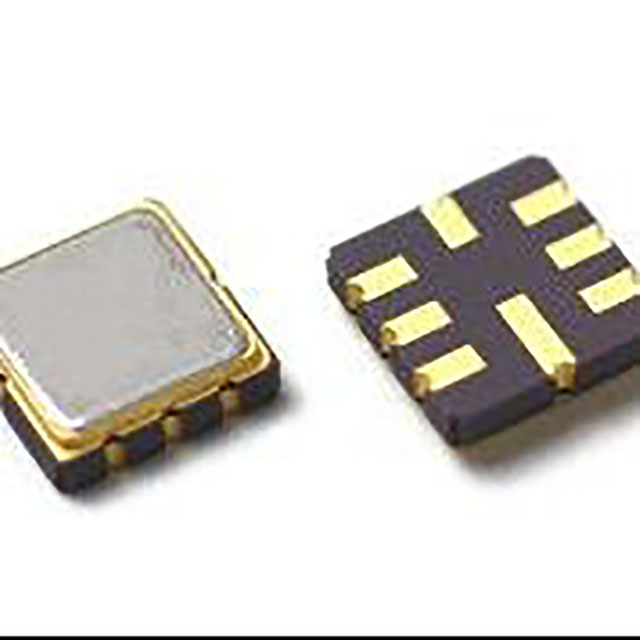
The SF2223D is a Surface Acoustic Wave (SAW) bandpass filter manufactured by RFMi, designed for signal conditioning applications. It operates at a center frequency of 184.32 MHz with a frequency range spanning from 169.32 MHz to 199.32 MHz. The device features a bandwidth of 30 kHz and supports a voltage rating of 30 V. Electrical characteristics include an impedance configuration of 50 Ohms and an insertion loss of 3.15 dB. It is housed in an 8-SMD surface-mount package, specifically the SM-13365-12 form factor. The component is qualified under AEC-Q200 standards and functions within an operating temperature range of -40°C to +85°C.
Verify that the specific order matches the 8-SMD package type and the 184.32 MHz center frequency specification. Confirm AEC-Q200 automotive qualification status if required for the target application environment. Ensure compatibility with the specified 50 Ohm impedance and 30 V voltage rating during system integration. Check for any specific handling requirements associated with Surface Acoustic Wave components.
Select this component when a narrow bandwidth of 30 kHz is required around the 184.32 MHz frequency point. The 3.15 dB insertion loss makes it suitable for applications prioritizing signal integrity over minimal attenuation. The AEC-Q200 qualification indicates suitability for automotive environments, distinguishing it from general-purpose industrial filters. Consider the 8-SMD footprint constraints against available board space.
This part belongs to the SF series of SAW filters produced by RFMi, formerly associated with Akoustis technologies. The series focuses on signal conditioning components optimized for specific frequency bands. The SF2223D represents a specialized variant tailored for the ~184 MHz range, differing from other series members like the SF2344D which targets 241 MHz operations.
Direct substitutes must match the 184.32 MHz center frequency, 30 kHz bandwidth, and 8-SMD package dimensions. Verify that alternative parts maintain comparable insertion loss and AEC-Q200 certification levels for automotive equivalence.
 SF2223D
The activity of extra discounts on wholesale prices is in full swing…
Please fill in your contact information and we will send you the latest wholesale price list.