ChipApex | Global Electronic Components Supplier
SEARCH
Search Product
Search Post
— IC芯片 | 连接器 | 传感器 | 被动器件 —
Search productSearch post
— IC芯片 | 连接器 | 传感器 | 被动器件 —
Consult the customer manager about the wholesale price.
consultation hotline:86-132-6715-2157
email:[email protected]
Contact the product manager for consultation. One-stop consultation is available.
Do you want a lower wholesale price? Please send us your inquiry and we will reply immediately.
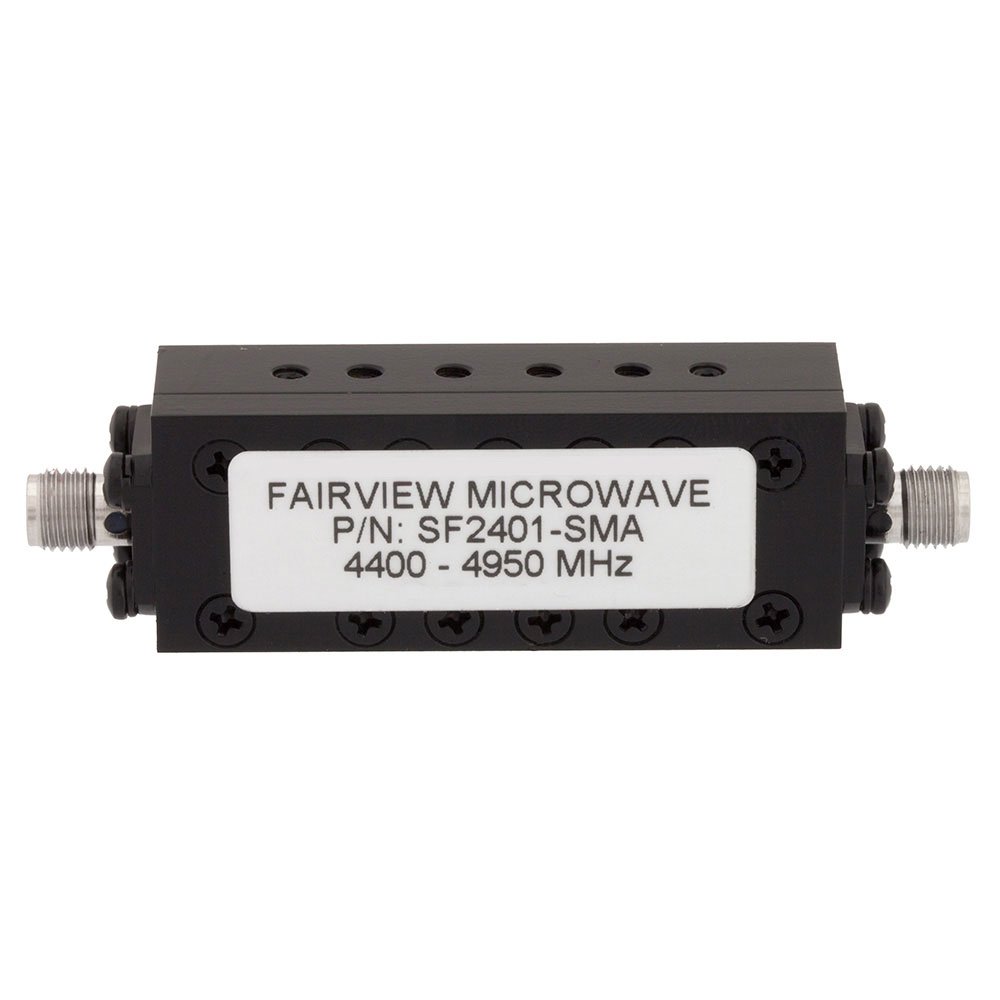
The SF2401-SMA is a bandpass cavity filter manufactured by Fairview Microwave, designed for RF applications within the 4.4 GHz to 4.95 GHz frequency range. It features SMA female connectors and operates with a center frequency of 4.675 GHz and a bandwidth of 550 MHz. The component exhibits an insertion loss of 1.25 dB and utilizes passive filter technology. This module is constructed as a standalone unit with integrated SMA interfaces, suitable for precise signal filtering in wireless communication systems requiring stable performance across its specified operational bandwidth.
Verify the exact frequency range and connector type against project specifications before ordering. Confirm that the SMA female interface matches existing system cabling. Ensure the 1.25 dB insertion loss meets system budget requirements. Check for any environmental ratings if the deployment involves extreme conditions. Validate compatibility with surrounding RF components to prevent impedance mismatches.
Select this component when a fixed bandpass response between 4.4 GHz and 4.95 GHz is required. Consider the SMA interface for standard coaxial connections. Evaluate the insertion loss impact on overall system gain. Compare against other cavity filters if tighter bandwidth or lower loss is necessary. Ensure the physical module dimensions fit the intended enclosure space.
Fairview Microwave produces specialized RF components including amplifiers, adapters, and filters. The SF2401-SMA belongs to their line of passive RF filters, distinct from their active amplifier series like the SPA-110. These components are typically used in high-frequency applications where signal purity and frequency selectivity are critical. The brand emphasizes precision engineering for microwave and millimeter-wave frequencies.
No direct public substitute part numbers are confirmed for the SF2401-SMA. Alternative solutions may require custom cavity filters or different manufacturers offering similar SMA-connected bandpass specifications. Verify electrical parameters such as center frequency and insertion loss when evaluating potential replacements.
 SF2401-SMA
The activity of extra discounts on wholesale prices is in full swing…
Please fill in your contact information and we will send you the latest wholesale price list.