 ChipApex | Global Electronic Components Supplier
SEARCH
Search Product
Search Post
— IC芯片 | 连接器 | 传感器 | 被动器件 —
Search productSearch post
— IC芯片 | 连接器 | 传感器 | 被动器件 —
Consult the customer manager about the wholesale price.
consultation hotline:86-132-6715-2157
email:[email protected]
Contact the product manager for consultation. One-stop consultation is available.
Do you want a lower wholesale price? Please send us your inquiry and we will reply immediately.
The SFH600-2X001 is a single-channel optoisolator manufactured by Vishay Semiconductor Opto Division. It features a GaAs LED emitter optically coupled to a silicon planar phototransistor detector with an exposed base. The device provides 5300Vrms isolation voltage and operates within a temperature range of -55°C to +100°C. Key electrical parameters include a maximum collector-emitter voltage of 70V, a DC forward current limit of 60mA, and a typical forward voltage of 1.65V. The output transistor supports a maximum collector current of 100mA with a saturation voltage of 400mV max. Current transfer ratio ranges from 100% to 200% at 10mA input. Switching characteristics include typical rise and fall times of 3µs and 12µs respectively.
Verify the specific suffix X001 against the manufacturer's official datasheet to confirm pinout and packaging configuration. Ensure that the required isolation voltage and current transfer ratio meet the design specifications. Confirm RoHS compliance status as per the latest product documentation. Check for any recent production changes or obsolescence notices issued by Vishay Semiconductor Opto Division prior to finalizing procurement plans.
Select this component when a robust phototransistor output with an exposed base is required for faster switching or external biasing. The 5300Vrms isolation rating makes it suitable for applications demanding high safety margins. Consider the 100mA collector current capacity for driving moderate loads directly. Evaluate the operating temperature range to ensure compatibility with the intended environmental conditions.
The SFH600 series belongs to Vishay's portfolio of general-purpose optocouplers. This specific model represents a variant with a 6-DIP package. It is part of a family designed for reliable signal transmission across isolated barriers. The exposed base feature allows for additional circuit integration options not available in standard packages.
CNY17F-3 is listed as a substitute option. Verify pin compatibility and electrical parameter alignment before substitution.
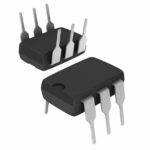 SFH600-2X001
The activity of extra discounts on wholesale prices is in full swing…
Please fill in your contact information and we will send you the latest wholesale price list.





