 ChipApex | Global Electronic Components Supplier
SEARCH
Search Product
Search Post
— IC芯片 | 连接器 | 传感器 | 被动器件 —
Search productSearch post
— IC芯片 | 连接器 | 传感器 | 被动器件 —
Consult the customer manager about the wholesale price.
consultation hotline:86-132-6715-2157
email:[email protected]
Contact the product manager for consultation. One-stop consultation is available.
Do you want a lower wholesale price? Please send us your inquiry and we will reply immediately.
The SFH601-1 is a single-channel transistor output optocoupler manufactured by Isocom Components. It features an NPN phototransistor output and utilizes a DIP-6 through-hole package. The device provides high isolation with a rated voltage of 5300 Vrms. Key electrical parameters include a maximum collector-emitter voltage of 100 V, a maximum collector current of 50 mA, and a forward current rating of 60 mA. The typical current transfer ratio is specified at 80 percent.
Verify the specific manufacturer designation upon procurement, as component sourcing may involve transitions between Infineon, Vishay, or Isocom due to industry acquisitions. Confirm that the received unit matches the exact part number SFH601-1 to ensure correct CTR specifications and pinout compatibility. Cross-reference datasheets from authorized distributors to validate current production status and compliance certifications before finalizing supply chain agreements.
Select this component when a robust, general-purpose optocoupler with high isolation voltage is required for digital signal transmission. The DIP-6 form factor suits legacy or space-permissive designs where surface-mount alternatives are not mandatory. Ensure the application operates within the specified temperature range and does not exceed the maximum collector current limits during switching transients.
This device belongs to the SFH601 series of transistor output optocouplers, which are widely utilized for basic isolation tasks. The series offers various current transfer ratio grades to accommodate different sensitivity requirements in downstream circuitry. It serves as a fundamental building block for creating electrically isolated interfaces in power supplies and communication modules.
The SFH601-2 and SFH601-3 are confirmed substitutes within the same family, offering different current transfer ratio ranges while maintaining identical pinouts and mechanical dimensions. Verify that the alternative grade meets the specific gain requirements of the target application circuit.
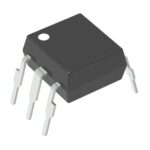 SFH601-1
The activity of extra discounts on wholesale prices is in full swing…
Please fill in your contact information and we will send you the latest wholesale price list.





