 ChipApex | Global Electronic Components Supplier
SEARCH
Search Product
Search Post
— IC芯片 | 连接器 | 传感器 | 被动器件 —
Search productSearch post
— IC芯片 | 连接器 | 传感器 | 被动器件 —
Consult the customer manager about the wholesale price.
consultation hotline:86-132-6715-2157
email:[email protected]
Contact the product manager for consultation. One-stop consultation is available.
Do you want a lower wholesale price? Please send us your inquiry and we will reply immediately.
The SFH601-5SM is a high-speed phototransistor optocoupler manufactured by Isocom Components. It features an infrared emitting diode coupled to a silicon phototransistor within a compact SMD package. The device provides electrical isolation between input and output circuits while transmitting digital or analog signals. Key electrical characteristics include a typical current transfer ratio and switching speed suitable for data communication applications. The component operates with standard logic levels and offers reliable performance in industrial and consumer electronic environments.
Verify the specific suffix designation against official manufacturer documentation to ensure correct pinout and packaging configuration. Confirm that the requested part matches the exact model number including all alphanumeric codes. Check for any recent updates to the datasheet regarding mechanical dimensions or recommended soldering profiles. Ensure compliance with relevant safety standards required for your specific application environment before finalizing procurement orders.
Consider the operating voltage range and current transfer ratio requirements when selecting this component for circuit design. Evaluate the physical space constraints on the PCB to ensure the surface-mount package fits within the designated area. Assess the thermal management needs of the system, as heat dissipation can affect long-term reliability. Compare alternative optocouplers if higher isolation voltage or different switching speeds are necessary for the specific application.
This component belongs to the family of surface-mount optocouplers designed for modern electronic assemblies. It represents a shift from traditional through-hole packages to more space-efficient solutions. The integration of an infrared LED and phototransistor allows for efficient signal coupling without direct electrical connection. This type of component is widely used in applications requiring robust noise immunity and galvanic isolation.
Check for direct replacements with identical pin configurations and electrical specifications. Verify that any substitute component meets the same isolation voltage and speed requirements. Ensure mechanical compatibility with existing PCB footprints to avoid redesign efforts. Consult official cross-reference lists provided by manufacturers for validated alternatives.
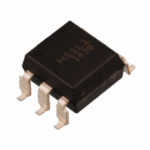 SFH601-5SM
The activity of extra discounts on wholesale prices is in full swing…
Please fill in your contact information and we will send you the latest wholesale price list.




