 ChipApex | Global Electronic Components Supplier
SEARCH
Search Product
Search Post
— IC芯片 | 连接器 | 传感器 | 被动器件 —
Search productSearch post
— IC芯片 | 连接器 | 传感器 | 被动器件 —
Consult the customer manager about the wholesale price.
consultation hotline:86-132-6715-2157
email:[email protected]
Contact the product manager for consultation. One-stop consultation is available.
Do you want a lower wholesale price? Please send us your inquiry and we will reply immediately.
The SFH609-3XG is a single-channel phototransistor output optocoupler manufactured by Isocom Components. It features a DIP-6 package and operates with a DC input current type. The device provides an isolation voltage of 2800 Vrms, ensuring robust electrical separation between input and output circuits. Key performance parameters include a minimum collector-emitter breakdown voltage of 70 V and a rated current transfer ratio of 40%. The component supports a maximum forward current of 60 mA and maintains operation within a temperature range of -55°C to 100°C.
Verify the specific suffix 'XG' against official manufacturer documentation to confirm lead form and packaging specifications. Ensure that the required isolation voltage rating of 2800 Vrms meets the safety standards of the target application environment. Cross-reference the DIP-6 pinout with the circuit schematic to prevent installation errors during assembly.
Select this component when a standard phototransistor output is sufficient for the isolation requirement. The 40% current transfer ratio indicates suitability for moderate gain applications. Consider the 70 V collector-emitter breakdown voltage limit when designing the output load circuit to ensure reliable operation under varying voltage conditions without exceeding device ratings.
This part belongs to the SFH600 series of optically coupled isolators produced by Isocom Components. The series includes multiple variants such as SFH609-1 through SFH609-5, differentiated primarily by their current transfer ratio characteristics. The SFH609-3 variant specifically targets applications requiring a defined medium-gain response profile within the standard DIP-6 footprint.
Direct replacements may include other SFH609 series variants like SFH609-1 or SFH609-2 if current transfer ratio differences are acceptable. Generic equivalents from other manufacturers offering similar DIP-6 phototransistor optocouplers with comparable isolation voltages can be considered after verifying pin compatibility and electrical limits.
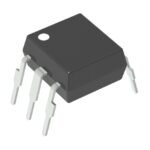 SFH609-3XG
The activity of extra discounts on wholesale prices is in full swing…
Please fill in your contact information and we will send you the latest wholesale price list.






