 ChipApex | Global Electronic Components Supplier
SEARCH
Search Product
Search Post
— IC芯片 | 连接器 | 传感器 | 被动器件 —
Search productSearch post
— IC芯片 | 连接器 | 传感器 | 被动器件 —
Consult the customer manager about the wholesale price.
consultation hotline:86-132-6715-2157
email:[email protected]
Contact the product manager for consultation. One-stop consultation is available.
Do you want a lower wholesale price? Please send us your inquiry and we will reply immediately.
The Vishay SFH610A-1X016 is a single-channel transistor output optocoupler housed in a 4-DIP package. It features an NPN phototransistor output with a maximum collector-emitter voltage of 70 V and a maximum collector current of 50 mA. The device provides an isolation voltage of 5300 Vrms, ensuring robust electrical separation between input and output circuits. Key electrical parameters include a forward current of 60 mA, a forward voltage of 1.65 V, and a power dissipation of 150 mW. The component operates within a temperature range of -55°C to +100°C, with rise and fall times of 3 µs and 14 µs respectively.
Verify the specific suffix X016 against official Vishay documentation to confirm packaging details and compliance status. Ensure the procurement source provides valid traceability for semiconductor components. Cross-reference the manufacturer part number with authorized distributor listings to confirm authenticity and avoid counterfeit parts. Check for any recent obsolescence notices or lifecycle changes directly from the manufacturer before finalizing orders.
Select this component when a single-channel isolation solution with moderate speed and high voltage withstand capability is required. Compare the 5300 Vrms isolation rating and 50 mA collector current limits against system requirements. Consider the 4-DIP package constraints for PCB layout. Evaluate thermal management needs given the 150 mW power dissipation rating at elevated operating temperatures up to 100°C.
This component belongs to the SFH610A series of high-reliability transistor output optocouplers manufactured by Vishay Semiconductor Opto Division. The series is designed for general-purpose isolation applications where robust performance and long-term stability are critical. The SFH610A-1X016 variant specifically denotes the tape and reel packaging format, distinguishing it from tube-packaged equivalents like the SFH610A-3.
Official cross-reference data indicates that the VO610A-1 is a recommended alternative with similar specifications. Verify pinout compatibility and electrical parameter alignment before substitution. Ensure the replacement part meets the same isolation voltage and current ratings required by the design.
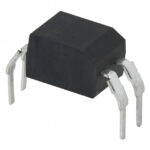 SFH610A-1X016
The activity of extra discounts on wholesale prices is in full swing…
Please fill in your contact information and we will send you the latest wholesale price list.






