 ChipApex | Global Electronic Components Supplier
SEARCH
Search Product
Search Post
— IC芯片 | 连接器 | 传感器 | 被动器件 —
Search productSearch post
— IC芯片 | 连接器 | 传感器 | 被动器件 —
Consult the customer manager about the wholesale price.
consultation hotline:86-132-6715-2157
email:[email protected]
Contact the product manager for consultation. One-stop consultation is available.
Do you want a lower wholesale price? Please send us your inquiry and we will reply immediately.
The SFH615A-2X016-D is a single-channel transistor output optocoupler manufactured by Vishay Semiconductor Opto Division. It features an NPN phototransistor output and utilizes a through-hole PDIP-4 package. The device provides high isolation with a rated insulation voltage of 5300 Vrms. Key electrical parameters include a current transfer ratio ranging from 63% to 125%, a maximum collector-emitter voltage of 70 V, and a maximum collector current of 50 mA. The forward voltage is specified at 1.65 V with a maximum forward current of 60 mA. Operating characteristics include a rise time of 3 µs and a fall time of 14 µs. The component supports a power dissipation of 150 mW and functions within a temperature range of -55°C to +100°C.
Verify the specific suffix designation when sourcing this component, as it denotes particular manufacturing or testing criteria defined by Vishay. Confirm that the procurement channel provides original manufacturer documentation to ensure authenticity. Check for RoHS compliance status if environmental regulations apply to the end product. Ensure the supplier can provide traceability records for quality assurance purposes.
Select this component when a high-voltage isolated interface is required with moderate speed performance. The wide CTR range allows for design flexibility in varying input conditions. Consider the through-hole package constraints during PCB layout planning. Evaluate the thermal management requirements based on the 150 mW power dissipation limit under expected operating temperatures.
This part belongs to the SFH615A series of high-reliability optocouplers designed for demanding industrial environments. The series offers various current transfer ratio grades to suit different application needs while maintaining consistent electrical characteristics and isolation ratings across the family.
Public data indicates the SFH615A-2X016-D is obsolete. Parametric equivalents such as the SFH615A series variants may be considered. Verify pinout compatibility and electrical parameter alignment before substitution.
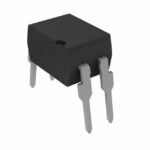 SFH615A-2X016-D
The activity of extra discounts on wholesale prices is in full swing…
Please fill in your contact information and we will send you the latest wholesale price list.







