ChipApex | Global Electronic Components Supplier
SEARCH
Search Product
Search Post
— IC芯片 | 连接器 | 传感器 | 被动器件 —
Search productSearch post
— IC芯片 | 连接器 | 传感器 | 被动器件 —
Consult the customer manager about the wholesale price.
consultation hotline:86-132-6715-2157
email:[email protected]
Contact the product manager for consultation. One-stop consultation is available.
Do you want a lower wholesale price? Please send us your inquiry and we will reply immediately.
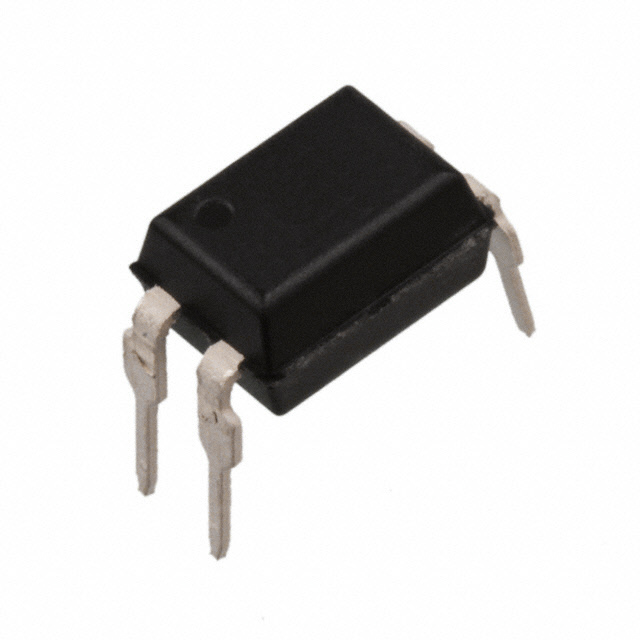
The SFH617A-3X is a single-channel transistor output optocoupler manufactured by Isocom Components. It integrates an infrared LED with an NPN silicon phototransistor in a 4-pin DIP package. The device provides an isolation voltage of 5.3 kVrms and supports a maximum collector current of 50 mA. Key electrical parameters include a minimum current transfer ratio of 100%, a forward voltage of 1.35 V, and a maximum collector-emitter saturation voltage of 400 mV. It operates within a temperature range of -55°C to +110°C.
Verify the specific manufacturer designation upon ordering, as this component may be sourced from Isocom Components or Vishay Semiconductors under equivalent part numbers. Confirm that the procurement documentation explicitly references the SFH617A-3X model to ensure compatibility with required insulation voltage and current transfer ratio specifications. Cross-reference datasheets to validate pinout and package dimensions against your circuit design requirements before finalizing purchase orders.
Select this component when a single-channel isolation barrier with a minimum 100% current transfer ratio is required. Ensure the application demands a 5.3 kVrms isolation rating and a through-hole DIP-4 package. Verify that the operating temperature range of -55°C to +110°C aligns with environmental conditions. Consider the 50 mA collector current limit and 400 mV saturation voltage for load driving capabilities compared to alternative optocouplers.
This component belongs to the family of low input current phototransistor optically coupled isolators. It serves as a cost-effective solution for basic signal transmission across isolated boundaries. The device is commonly used in applications where simple on-off signaling is sufficient, distinguishing it from linear optocouplers or high-speed digital variants. Its DIP-4 form factor facilitates easy integration into legacy and modern PCB layouts.
The VO617A-3X016 from Vishay Semiconductors is documented as a recommended alternative. Verify that the substitute maintains identical pin configuration, isolation voltage, and current transfer ratio specifications to ensure functional equivalence without redesigning the surrounding circuitry.
 SFH617A-3X
The activity of extra discounts on wholesale prices is in full swing…
Please fill in your contact information and we will send you the latest wholesale price list.