ChipApex | Global Electronic Components Supplier
SEARCH
Search Product
Search Post
— IC芯片 | 连接器 | 传感器 | 被动器件 —
Search productSearch post
— IC芯片 | 连接器 | 传感器 | 被动器件 —
Consult the customer manager about the wholesale price.
consultation hotline:86-132-6715-2157
email:[email protected]
Contact the product manager for consultation. One-stop consultation is available.
Do you want a lower wholesale price? Please send us your inquiry and we will reply immediately.
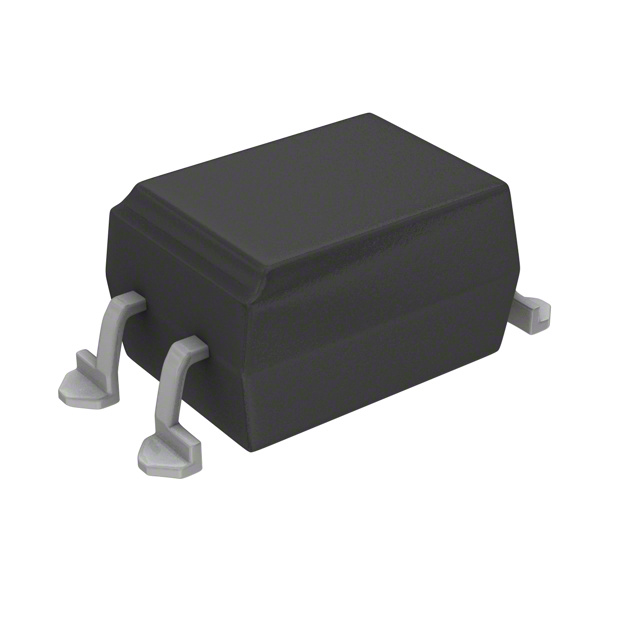
The SFH6286-3X001T is a single-channel transistor output optocoupler from Vishay, designed for surface-mount applications. It features an NPN phototransistor output with a high current transfer ratio ranging from 100% to 320%. The device provides robust electrical isolation of 5300 Vrms and supports AC input signals. Key electrical parameters include a maximum collector-emitter voltage of 55 V, a forward current of 50 mA, and a typical rise time of 3.5 µs. It operates within a temperature range of -55°C to +100°C and is housed in a compact 4-SMD package.
Verify the specific suffix '3X001T' to confirm the tape-and-reel packaging configuration, as standard versions may differ. Ensure compatibility with surface-mount assembly processes by checking the recommended soldering profile for the 4-SMD package. Cross-reference the manufacturer's latest datasheet for any updates on mechanical dimensions or thermal characteristics before finalizing the design.
Choose this component when high CTR and AC input compatibility are required for space-constrained designs. The 5300 Vrms isolation rating makes it suitable for mains-connected applications. Consider the 3.5 µs rise time for timing-critical applications. Verify that the 55 V collector-emitter voltage meets the load requirements of the target circuit.
This part belongs to the SFH series of optocouplers, which are widely used in industrial and consumer electronics for galvanic isolation. The SFH6286 variant specifically targets applications requiring high reliability and fast response times. It complements other Vishay optocouplers like the SFH6186 and SFH6286-3T, offering different packaging options such as tubes or reels to suit various production needs.
The SFH6286-3T is a related variant with identical electrical specifications but may differ in packaging. Verify pinout compatibility and mounting style when substituting. Other Vishay models in the SFH family should be evaluated based on their specific isolation voltages and CTR ranges to ensure functional equivalence.
 SFH6286-3X001T
The activity of extra discounts on wholesale prices is in full swing…
Please fill in your contact information and we will send you the latest wholesale price list.