ChipApex | Global Electronic Components Supplier
SEARCH
Search Product
Search Post
— IC芯片 | 连接器 | 传感器 | 被动器件 —
Search productSearch post
— IC芯片 | 连接器 | 传感器 | 被动器件 —
Consult the customer manager about the wholesale price.
consultation hotline:86-132-6715-2157
email:[email protected]
Contact the product manager for consultation. One-stop consultation is available.
Do you want a lower wholesale price? Please send us your inquiry and we will reply immediately.
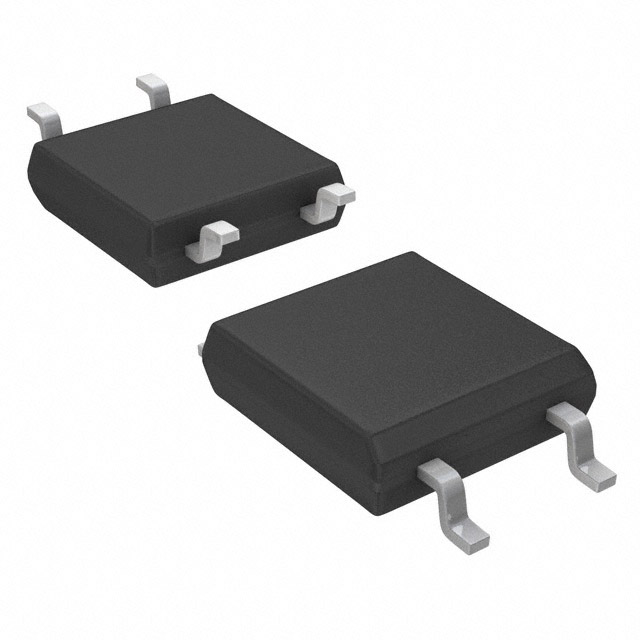
The SFH690BT is a single-channel transistor output optocoupler manufactured by Vishay Semiconductor Opto Division. It features an NPN phototransistor output housed in a compact SOP-4 surface-mount package with a 2.54mm lead pitch. The device provides high isolation capability with a rated insulation voltage of 3750 Vrms. Key electrical parameters include a collector-emitter saturation voltage of 300 mV maximum, a forward current of 50 mA, and a forward voltage of 1.4 V. The current transfer ratio ranges from 100% to 300%. Switching characteristics are defined by a rise time of 3 µs and a fall time of 4 µs. It operates within a temperature range of -55°C to +100°C.
Verify the specific suffix 'BT' corresponds to the required current transfer ratio bin (100-300%) and packaging configuration. Confirm that the SOP-4 package dimensions align with the target PCB layout. Ensure compliance with RoHS directives if required by the end application standards. Check datasheet revisions for any updates to mechanical or electrical specifications prior to final design approval.
Select this component when a single-channel isolation barrier with moderate speed is required. The SOP-4 package offers space efficiency compared to larger DIP options. Consider the 3750 Vrms isolation rating for safety requirements. Evaluate the 100-300% CTR range against the driving circuit capabilities to ensure reliable switching across the specified temperature range.
The SFH690BT belongs to the SFH690 series of transistor output optocouplers. This family includes variants such as SFH690ABT and SFH690CT, which may differ in current transfer ratio bins or specific packaging options. The series is designed for general-purpose isolation tasks where cost-effective surface-mount solutions are preferred over through-hole alternatives.
Direct substitutes within the same family include SFH690ABT and SFH690CT. Verify that alternative part numbers match the required CTR bin and package type. Cross-reference pinouts and isolation voltages to ensure functional compatibility without redesigning the surrounding circuitry.
 SFH690BT
The activity of extra discounts on wholesale prices is in full swing…
Please fill in your contact information and we will send you the latest wholesale price list.