ChipApex | Global Electronic Components Supplier
SEARCH
Search Product
Search Post
— IC芯片 | 连接器 | 传感器 | 被动器件 —
Search productSearch post
— IC芯片 | 连接器 | 传感器 | 被动器件 —
Consult the customer manager about the wholesale price.
consultation hotline:86-132-6715-2157
email:[email protected]
Contact the product manager for consultation. One-stop consultation is available.
Do you want a lower wholesale price? Please send us your inquiry and we will reply immediately.
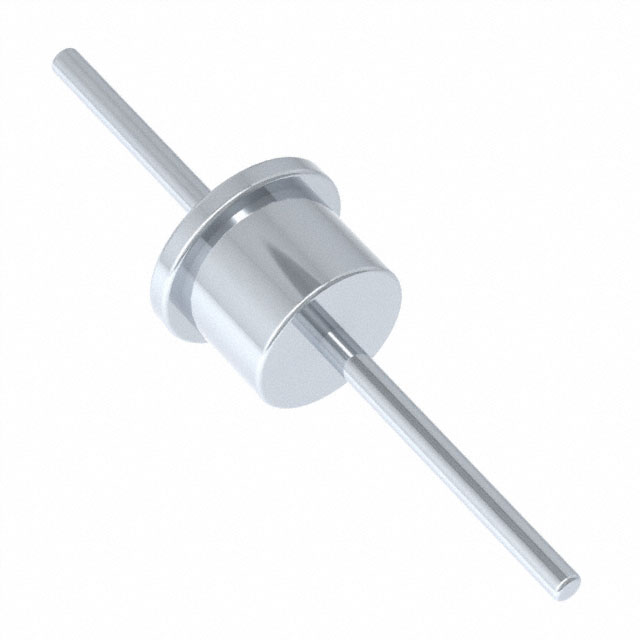
The Knowles Syfer SFSTC5000101MC0 is a feedthrough capacitor designed for EMI filtering applications. It features a capacitance of 100 pF with a tolerance of ±20%. The component supports a DC voltage rating of 500 VDC and utilizes C0G dielectric material. It has an axial lead configuration with a maximum DC current rating of 15 A. The unit operates within a temperature range of -55°C to +125°C and provides a minimum insulation resistance of 10,000 MOhm. The physical diameter is specified as 4 mm.
Verify the specific manufacturer datasheet for the SFSTC5000101MC0 to confirm exact dimensional tolerances and electrical limits before integration. Ensure that the operating environment remains within the specified -55°C to +125°C range to maintain reliability. Cross-reference the 15 A current rating against actual peak load requirements to prevent thermal degradation. Confirm RoHS compliance status if required by your manufacturing standards.
Select this component when high-current handling capability is required alongside precise low-capacitance filtering. The C0G dielectric ensures minimal capacitance drift under varying bias conditions. Compare the 4 mm diameter against available panel or chassis mounting space. Consider the axial lead style for through-hole assembly processes rather than surface mount alternatives.
This part belongs to the Knowles Syfer feedthrough capacitor family, which specializes in EMI/RFI suppression. These components are engineered for harsh environments requiring robust noise filtration. The series typically serves critical infrastructure where signal integrity and power stability are paramount. The SFSTC variant specifically denotes axial lead construction for durable mechanical attachment.
Direct substitutes must match the 100 pF capacitance, 500 VDC rating, and 15 A current capacity. Verify that alternative parts offer comparable C0G dielectric stability and similar axial dimensions. Check for equivalent insulation resistance values to ensure identical leakage characteristics.
 SFSTC5000101MC0
The activity of extra discounts on wholesale prices is in full swing…
Please fill in your contact information and we will send you the latest wholesale price list.